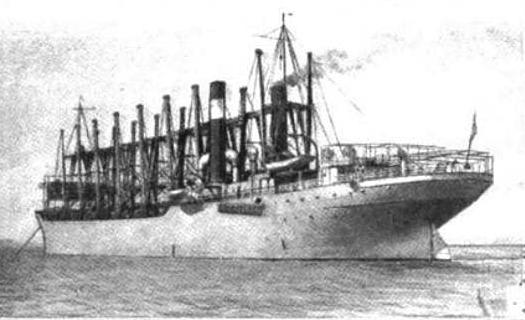
I'm not really posting today because it's founding member of the Brethren Timmy!'s birthday. I'll be playing hooky with him. But that's no reason for the rest of the Brethren to miss out on a great piece on piratical history this Monday.
So click over to this post by Blue Lou Logan on Alexander Exquemelin and the old school buccaneers. Trust me, you won't be disappointed.
Header: A Buccaneer by Howard Pyle via Wikimedia
Showing posts with label Guest Blogger. Show all posts
Monday, September 17, 2012
Monday, July 30, 2012
History: The Glendower Murder
It is my pleasure and
privilege to welcome one of my favorite people, writers and storytellers to
Triple P. My dear friend Undine, who
long time Brethren will know from her insightful and delightful World of Edgar Allan Poe blog, as today’s anniversary guest
blogger. You can also follow her on Twitter. Don’t miss a word of today's post; they’re all
worth savoring.
For an
Edgar Allan Poe devotee such as myself, the strange and bloody goings-on aboard
the good ship “Glendower” have an irresistible fascination. Here we have a murder claustrophobic enough
to unsettle Hitchcock, strange enough to make Dame Christie throw up her hands,
and impenetrable enough to baffle Poe’s M. Dupin. It resembles the Lizzie Borden case, in the
sense that we think we “know” who committed the crime in question, but we can
never truly know. Also like the Borden murders, the complete
absence of discernible motive leaves one deeply disquieted. If the captain of the “Glendower” could be
slaughtered in such an apparently pointless fashion, who among us is safe?
Our
tale-without-a-moral began on June 9, 1911.
The “Glendower,” a coal barge that had seen seventeen years of service,
was part of a three-ship flotilla. The
captain was fifty-five year old Charles Wyman, a man with a long, and so far as
is known, perfectly commendable history at sea.
His three crew members, William DeGraff, William Nilsen, and Antonio
Priskich, seemed both hard-working and respectable. The vessel appeared to be approaching its
scheduled destination of Newburyport, Massachusetts without incident. The first sign of trouble came at about eight
in the evening, when the barge began whistling.
It sent out signals indicating it wanted the “Monocacy,” the tug that
was leading it, to change course and come alongside.
The
“Monocacy’s” pilot, a Captain Camp, realized this was a sign of trouble, but
what happened next must still have been a great shock. When his tug approached the barge, the ship’s
cook, William DeGraff, shouted to him, “The captain is dead!” When Camp sputtered out words of disbelief, DeGraff
reiterated phlegmatically, “He took a rest this noon at twelve, and when we
went to call him around five o’clock—well, he was dead, that’s all. We found him dead.”
Camp was
understandably stunned by the news, but he assumed Wyman had died of some unexpected,
but perfectly natural causes. Before
heading to shore and notifying the police, the flotilla dropped anchor and he
attempted to question DeGraff further.
In response to these inquiries, the cook said that Wyman had evidently
died around noon, casually adding the information that “there was blood in the
bunk, too.” He invited Camp to come
aboard and inspect the corpse himself.
Camp
declined—he probably already suspected by this point that events were becoming far too weird for him to handle
alone—and the ships made their way to Boston, where he went ashore to file a
report with the police and the local coroner.
It was not
until dawn of the following day that the Suffolk County medical examiner, Dr.
George Magrath, accompanied by several policemen, went aboard the ill-fated
barge. DeGraff greeted them
quietly. DeGraff, a sailor for nearly
forty years, had joined the crew of the “Glendower” only a month before. DeGraff ‘s background was and is a
puzzle—virtually all we know of him is contained in the previous sentence—and
although he was a strongly-built man with powerful arms and shoulders, he was
also extremely hunchbacked. His strange,
oddly composed figure only compounded the grim atmosphere of the scene.
The
visitors found Wyman’s body lying face-down in his bunk. He was wrapped in a blanket, which was
heavily bloodstained. Drops of blood
also covered the area around him. His
head had been repeatedly battered with what was believed to be a hatchet or
large club. Dr. Magrath found a hammer
loosely held in the dead man’s hand. It
was, however, bloodless, proving that it had been placed in Wyman’s hands after
the blood on them had already dried. It
did not take a forensic genius to realize this was not, as Camp had assumed, a
stroke or heart attack, or even a suicide.
When
Magrath and the patrolmen questioned the crew, they obtained little helpful
information. The trio insisted that
there could not have been anyone but themselves aboard ship, and they all
professed complete ignorance of how their captain met his violent end. The policemen made a minute search of the
little barge, without discovering a single clue to help them solve the
mystery. The crewmembers were all placed
under arrest and brought ashore. It was
noted that DeGraff, unlike his obviously confused shipmates, was quietly wary,
taking careful notice of all that went on around him.
When the
trio faced a Boston Grand Jury, it was brought into evidence that while Nilsen
and Priskich bunked some distance away from the captain, DeGraff’s cabin
communicated with Wyman’s, enabling him to clandestinely enter Wyman’s
quarters. It was also revealed that the
other two survivors of the “Glendower” were continuously alone together during
that fatal afternoon, in a different part of the ship. It was judged to be a ridiculously easy case
to solve. There appeared to be literally
no one in the world who could have killed Captain Wyman but his crippled cook.
DeGraff
went on trial on February 19, 1912.
Testimony showed that DeGraff called the men to meals by ringing a
bell. Three of them ate at a time, while
the fourth manned the wheel. On the day
of the murder, Nilsen was at the wheel for the midday meal, which was served at
eleven. Priskich was with him until the
dinner bell rang, and DeGraff arrived for his turn at the wheel. Wyman ate a full meal and retired to the
chartroom, which adjoined his cabin, shortly before twelve. It was the last time anyone admitted seeing
him alive.
Nilsen took
the wheel at noon, and Priskich went to the engine room, where it was
impossible for him to reach Wyman’s cabin unobserved. DeGraff went somewhere below deck, where he
was unseen by Nilsen or Priskich until close to five PM. Around one-thirty Nilsen thought he heard a
groan or cry, without being able to place its source. (Some vaguer accounts state he heard an angry
cry of “Get out of here!”) Doctors who
examined the murder victim believed that what he heard were the last sounds
made by Captain Wyman.
At two,
Priskich took his place at the wheel.
Nilsen testified that he briefly rested in his bunk, and then rejoined
Priskich. From then until the
four-thirty supper time, the pair were constantly within sight of the other.
Supper
was—for the first time—late, by about fifteen minutes. DeGraff came to take the wheel, and Nilsen
and Priskich went to eat. They were
surprised to find the captain was not there.
After waiting fruitlessly for a while, they went to question the cook
about what they should do. DeGraff told
them indifferently to go ahead and eat—the captain would turn up
eventually. Priskich knocked on Wyman’s
door, but got no reply.
After the
two men ate, they again consulted DeGraff about their increasing unease with
the situation. The cook, with the same
air of nonchalance he displayed throughout the entire story, dismissed their
worries. When Priskich pointed out that
Wyman was due to take the wheel at five, DeGraff replied that he himself would
take the captain’s place. However, after
Priskich left to look after the engines, the cook told Nilsen to take over the
wheel, as he had to clean up after the meal.
Priskich
returned to the wheelhouse an hour and a half later. Upon seeing that the captain had yet to make
an appearance, he insisted on breaking into Wyman’s cabin—a plan DeGraff
strongly discouraged--but his crewmates finally overruled him. Priskich and DeGraff entered Wyman’s cabin,
where their captain’s body was finally discovered. Priskich—again over DeGraff’s
demurrals—insisted on immediately alerting their tug. Before doing so, he suddenly stopped and said
“I don’t really know Captain Wyman is dead.”
“Sure, he
died,” DeGraff replied. “He died long
ago, for I took his hand like this,” holding his left wrist with his right
hand.
The weapon
that killed Wyman was never found, and no blood was on the clothing of the
three survivors. However, only one of
DeGraff’s aprons—freshly washed and unused—could be located.
At
DeGraff’s trial, the prosecution’s main difficulty was establishing
motive. They found two witnesses who
testified that DeGraff had said Wyman was “no good,” and that he had sworn to
kill him. These men were unable to give
any reason for the cook’s reputed hostility, however.
When
DeGraff himself took the stand, his testimony was terse and unenlightening. The best his attorney could do for a defense
was to suggest that a stowaway had secretly hidden aboard ship, slaughtered the
captain for reasons unknown, and then managed to jump overboard and swim to shore
unseen. The prosecutor, on the other
hand, was able to establish that DeGraff was the only one on the ship who had
the time and opportunity to commit the crime.
He also pointed out that the murder must have been done by someone
familiar with Wyman’s habits, and surely some secret lurker would be unable to
know when the captain would be invisible to the rest of the ship.
By the
morning after both sides had rested their case, the jury reached a
verdict: “Not guilty.” Evidently, the prosecution’s inability to
prove why DeGraff would wish to kill his captain so deliberately and violently
outweighed everything else, as far as these jurymen were concerned. They also likely found it difficult to
picture such a calm, nondescript figure in the role of wild butcher. DeGraff left the courthouse, and disappeared
into history. Some believed he changed
his name and went on with his life at sea, but his subsequent history remains
as shadowy as everything else in this case.
There is a
legend that, immediately after DeGraff was freed, he confided to someone who
had struck up an acquaintance with him during his imprisonment the story of his
murder of Charles Wyman. The tale said
that many years before, when DeGraff was a strong, healthy young man, the
brutal Wyman had attacked him, causing him to suffer a fall that left him
permanently crippled. DeGraff waited
decades to take his revenge, biding his time until Wyman had forgotten him and
the tragic incident. Aboard the “Glendower,”
he finally found the opportunity to settle scores.
This slice
of Gothic melodrama is almost certainly the product of an enterprising
journalist or overly imaginative local blowhard, but in the absence of any
other explanation for what happened that gruesome day on the “Glendower,” it
has lingered ever since.
The fate of
the “Glendower” itself may be clearer.
Robert Ellis Cahill, the founder of Salem Massachusetts’ New England
Pirate Museum, has told of visiting an abandoned building in his city where the
second story is composed of an old barge.
Upon entering this upper half of the site, he was greeted by a ghostly
voice yelling “Get out of here!”
Cahill was
convinced that the barge used to construct the building was none other than the
remains of the “Glendower,” complete with the restless, un-avenged spirit of
its murdered Captain. “It sounds,” he
wrote, “like the ‘Glendower’ was kind of a hoodoo vessel.” This is certainly as good an answer to the
mystery as any.
In any
case, let us pay tribute to the otherwise unmemorable William DeGraff. This quiet, unassuming little cook may well
have been as mad, bad, and dangerous to know as the most bloodthirsty pirate.
Once more, my appreciation to Undine for making Triple P's third anniversary all the more special!
Header: Collier Jupiter c 1921 via Wikipedia
Thursday, July 28, 2011
Movies: The Ghost Ship
Well, Brethren, the wheel has turned again and almost surprisingly Triple P has reached the ripe old age of two. I think that makes her 14 in “dog years”. As a special gift to all who stop by and especially to say thank you to the Brethren of the Coast for sailing in company, a guest post is in order. From one of my favorite writers on the web or anywhere else for that matter, a movie review with a seafaring bent. Find House in Rlyeh aka Denis, who is an esteemed member of the Mysterious Order of the Skeleton Suit, delving into much more than just movies over at his delightful site The Horror!? and occasionally at WTF-Film. You can also follow him on Twitter. Today, though, he’s right here; enjoy!
When our gracious host Pauline first asked me to contribute a post to her blogging anniversary on Triple P, I was in a bit of internal panic. After all, what business does a guy who hasn't even read all Aubrey/Maturin novels have on a blog as encyclopaedically knowledgeable about all things nautical and piratical as Pauline's is?
Obviously, the business of talking about a movie that takes place on the sea, because if there's one thing I can go on and on and on about, it's movies. But even here, I found myself confronted by a problem: talking about some classic swashbuckler would be a bit boring, but going the other way - in the direction of true non-classics - would only lead directly into the arms of Ship of Zombies, the by far worst of the Blind Dead movies, and that's not a film I want to inflict on anybody via a guest blog, especially not on an anniversary.
Fortunately, one of my secret favourite movies came to the rescue in form of Val Lewton's production of Mark Robson's The Ghost Ship, made in 1943. Now, Lewton's stint with the b-movie arm of RKO studios has resulted in a small but fantastic corpus of horror films of a type that was much more psychologically oriented and ambiguous than its contemporaries (and much less ruined by comic relief and an obvious hatred of the audience for such films as were - for example - Universal's films of the same type at the time). Today, the most well-known film of these is of course Jacques Tourneur's Cat People, but The Ghost Ship's Mark Robson's The Seventh Victim (also made in 1943) is just as fine a movie.
The Ghost Ship for its part is not quite up to the standards of mood and subtlety of those films, although it is still a fine and thoughtful piece of work.
Orphan Tom Merriam (Russell Wade) arrives at his first post at sea (beyond duty on training ships) as the 3rd Officer of the Altair under Captain Will Stone (Richard Dix). Though their journey together starts with a bad omen in form of the death of an older seaman, Tom is quite happy with his new position and his new Captain. Stone seems to have taken an instant liking to the young man, and delights him with quite a few fatherly monologues about the nature of authority. Actually, someone less positive (or naive) than Tom could argue that Stone is somewhat obsessed with the concept of authority and tends to the monolithical side of the idea that sees a captain at sea taking on a role comparable to that of an absolute monarch or a dictator on land.
When push inevitably comes to shove, Tom learns that his Captain's much-loved "authority" is one that is only interested in bathing in its own perceived perfection and has little time for minor quibbles like the life and limbs of his crew. At first, it is only minor (yet, the sea being a dangerous place, still dangerous) things that could make Tom doubt the Captain's competence or - perhaps - even his sanity, and it's really more the spin Stone puts on things than what he actually does or doesn't do that keeps the viewer more uncomfortable with him than the young man is.
But when Stone isn't able to make the necessary incisions in a (radio-supported) appendix operation on a crewman, and Tom has to take the scalpel, the young officer begins to doubt his new-found father figure. Even so, Tom still asks the only witness to the whole affair, his (just as new-found) friend the radio operator Sparks (Edmund Glover), not to tell anyone who really took on the operation in the end. Not everyone can take looking at blood, after all, and there's no shame in that.
Stone explains the situation to Tom a bit differently, though: as somebody without any expertise in medicine, he was afraid to fail in saving the crewman's life. Although he's not completely able to ignore the fact that not trying the operation would have damned the sick man to death in any case, and though he probably perceives that the unspoken undercurrent of Stone's behaviour suggests he's much more afraid of being seen as fallible than of failure itself, Tom still seems to waver in his opinion about Stone.
Things change rather quickly when the ship's resident sea lawyer is crushed by the anchor chain shortly after he delivered a minor complaint to his captain. The audience knows this death is at least caused by Stone's negligence (and might just have been murder), but that's not something anyone else in the crew realizes - except for Tom, who meets Stone practically next to the dead body. The Captain is all too ready to deliver a slightly deranged monologue that would convince anyone that he had something to do with the sailor's death. Tom at least is now sure that Stone is a homicidal maniac, and he's not afraid of telling him or anyone else about it. Alas, nobody on board the ship does believe him.
Once back in port, the young man tries to convince the authorities of his shipping line of Stone's guilt, but - not surprisingly - only loses his position on the Altair.
And that could be the end, with a slightly damaged career for Tom and Stone still captain of his ship, ready to crack any day now, if an unfortunate accident would not leave our young hero back on board the Altair. Tom's inability to keep his head down and Stone's growing paranoia mean that the whole affair will end in violence.
As the synopsis should make clear, Robson's film isn't exactly the horror film one would suspect. The ghost ship of its title is a metaphorical one, describing the state of isolation that is the part of his position as a Captain that is responsible of driving Stone to the brink of madness, but also describing the comparable isolation Tom - as an orphan and a man without friends or companionship on land - is in, as well as the young officer's later isolation on board the Altair when nobody wants to believe what he knows to be true about Stone until it is nearly too late for him.
The film uses its sea-bound setting as the perfect place to take a close look at the horrors that arise from a blind trust in authority (obviously quite timely in 1943, and unfortunately quite timely again today) in a way that reminded me at times heavily of Joseph Conrad. The isolation and strict structures of life at sea are a backdrop that makes the film's themes all the more clear.
The Ghost Ship isn't satisfied with only using Tom and Stone as elements to build an allegory from, though. The film is also an early example of the psychological thriller, and as such, it is actually interested in its protagonist and its antagonist as people, and not just as parts in its philosophical machine. Not only is Tom a much more believable hero than one is used to from films of its era, but Stone, too, is more than just a eye-rolling maniac, which is not at all what I expect to find in a film made in 1943 (or today, for that matter), even though Val Lewton's productions were often more willing to admit the humanity of the mentally ill than any of their peers.
The Ghost Ship takes its time to show Stone as a man who knows he's losing touch with reality, but just can't find any way to get his grip again; asking for help is obviously right out for someone with his particular mental problems.
Given how loaded the film is with subtext and ideas (I've actually left out a whole line of thought about the complicity of people under authority with the abuse of authority in this post, among other things), it's not much of a surprise that it does from time to time waver under this weight. The Ghost Ship's first two acts are somewhat slow and ponderous and very talky - a state of affairs that isn't exactly helped by a certain theatricality of the acting I haven't seen in any of the other Lewton productions I know - and the "thrilling" parts (as well realized by Robson as I'd expected him to) only begin once Tom is back on the Altair. The surface excitement is just the sugar to let The Ghost Ship's themes go down more easily.
My most heartfelt appreciation goes to Denis for this wonderful addition to my humble blog’s repertoire. If you liked it as much as I did, hop over to The Horror!? and hit the follow button. Trust me; there’s plenty more where that came from.
Finally, a big thank you to all who have supported Triple P over the course of her evolution, which is still in progress. Let us spread all canvas, Brethren, and sail forth into another piratical year! After all, there is not a moment to lose.
Header: Poster for The Ghost Ship
When our gracious host Pauline first asked me to contribute a post to her blogging anniversary on Triple P, I was in a bit of internal panic. After all, what business does a guy who hasn't even read all Aubrey/Maturin novels have on a blog as encyclopaedically knowledgeable about all things nautical and piratical as Pauline's is?
Obviously, the business of talking about a movie that takes place on the sea, because if there's one thing I can go on and on and on about, it's movies. But even here, I found myself confronted by a problem: talking about some classic swashbuckler would be a bit boring, but going the other way - in the direction of true non-classics - would only lead directly into the arms of Ship of Zombies, the by far worst of the Blind Dead movies, and that's not a film I want to inflict on anybody via a guest blog, especially not on an anniversary.
Fortunately, one of my secret favourite movies came to the rescue in form of Val Lewton's production of Mark Robson's The Ghost Ship, made in 1943. Now, Lewton's stint with the b-movie arm of RKO studios has resulted in a small but fantastic corpus of horror films of a type that was much more psychologically oriented and ambiguous than its contemporaries (and much less ruined by comic relief and an obvious hatred of the audience for such films as were - for example - Universal's films of the same type at the time). Today, the most well-known film of these is of course Jacques Tourneur's Cat People, but The Ghost Ship's Mark Robson's The Seventh Victim (also made in 1943) is just as fine a movie.
The Ghost Ship for its part is not quite up to the standards of mood and subtlety of those films, although it is still a fine and thoughtful piece of work.
Orphan Tom Merriam (Russell Wade) arrives at his first post at sea (beyond duty on training ships) as the 3rd Officer of the Altair under Captain Will Stone (Richard Dix). Though their journey together starts with a bad omen in form of the death of an older seaman, Tom is quite happy with his new position and his new Captain. Stone seems to have taken an instant liking to the young man, and delights him with quite a few fatherly monologues about the nature of authority. Actually, someone less positive (or naive) than Tom could argue that Stone is somewhat obsessed with the concept of authority and tends to the monolithical side of the idea that sees a captain at sea taking on a role comparable to that of an absolute monarch or a dictator on land.
When push inevitably comes to shove, Tom learns that his Captain's much-loved "authority" is one that is only interested in bathing in its own perceived perfection and has little time for minor quibbles like the life and limbs of his crew. At first, it is only minor (yet, the sea being a dangerous place, still dangerous) things that could make Tom doubt the Captain's competence or - perhaps - even his sanity, and it's really more the spin Stone puts on things than what he actually does or doesn't do that keeps the viewer more uncomfortable with him than the young man is.
But when Stone isn't able to make the necessary incisions in a (radio-supported) appendix operation on a crewman, and Tom has to take the scalpel, the young officer begins to doubt his new-found father figure. Even so, Tom still asks the only witness to the whole affair, his (just as new-found) friend the radio operator Sparks (Edmund Glover), not to tell anyone who really took on the operation in the end. Not everyone can take looking at blood, after all, and there's no shame in that.
Stone explains the situation to Tom a bit differently, though: as somebody without any expertise in medicine, he was afraid to fail in saving the crewman's life. Although he's not completely able to ignore the fact that not trying the operation would have damned the sick man to death in any case, and though he probably perceives that the unspoken undercurrent of Stone's behaviour suggests he's much more afraid of being seen as fallible than of failure itself, Tom still seems to waver in his opinion about Stone.
Things change rather quickly when the ship's resident sea lawyer is crushed by the anchor chain shortly after he delivered a minor complaint to his captain. The audience knows this death is at least caused by Stone's negligence (and might just have been murder), but that's not something anyone else in the crew realizes - except for Tom, who meets Stone practically next to the dead body. The Captain is all too ready to deliver a slightly deranged monologue that would convince anyone that he had something to do with the sailor's death. Tom at least is now sure that Stone is a homicidal maniac, and he's not afraid of telling him or anyone else about it. Alas, nobody on board the ship does believe him.
Once back in port, the young man tries to convince the authorities of his shipping line of Stone's guilt, but - not surprisingly - only loses his position on the Altair.
And that could be the end, with a slightly damaged career for Tom and Stone still captain of his ship, ready to crack any day now, if an unfortunate accident would not leave our young hero back on board the Altair. Tom's inability to keep his head down and Stone's growing paranoia mean that the whole affair will end in violence.
As the synopsis should make clear, Robson's film isn't exactly the horror film one would suspect. The ghost ship of its title is a metaphorical one, describing the state of isolation that is the part of his position as a Captain that is responsible of driving Stone to the brink of madness, but also describing the comparable isolation Tom - as an orphan and a man without friends or companionship on land - is in, as well as the young officer's later isolation on board the Altair when nobody wants to believe what he knows to be true about Stone until it is nearly too late for him.
The film uses its sea-bound setting as the perfect place to take a close look at the horrors that arise from a blind trust in authority (obviously quite timely in 1943, and unfortunately quite timely again today) in a way that reminded me at times heavily of Joseph Conrad. The isolation and strict structures of life at sea are a backdrop that makes the film's themes all the more clear.
The Ghost Ship isn't satisfied with only using Tom and Stone as elements to build an allegory from, though. The film is also an early example of the psychological thriller, and as such, it is actually interested in its protagonist and its antagonist as people, and not just as parts in its philosophical machine. Not only is Tom a much more believable hero than one is used to from films of its era, but Stone, too, is more than just a eye-rolling maniac, which is not at all what I expect to find in a film made in 1943 (or today, for that matter), even though Val Lewton's productions were often more willing to admit the humanity of the mentally ill than any of their peers.
The Ghost Ship takes its time to show Stone as a man who knows he's losing touch with reality, but just can't find any way to get his grip again; asking for help is obviously right out for someone with his particular mental problems.
Given how loaded the film is with subtext and ideas (I've actually left out a whole line of thought about the complicity of people under authority with the abuse of authority in this post, among other things), it's not much of a surprise that it does from time to time waver under this weight. The Ghost Ship's first two acts are somewhat slow and ponderous and very talky - a state of affairs that isn't exactly helped by a certain theatricality of the acting I haven't seen in any of the other Lewton productions I know - and the "thrilling" parts (as well realized by Robson as I'd expected him to) only begin once Tom is back on the Altair. The surface excitement is just the sugar to let The Ghost Ship's themes go down more easily.
My most heartfelt appreciation goes to Denis for this wonderful addition to my humble blog’s repertoire. If you liked it as much as I did, hop over to The Horror!? and hit the follow button. Trust me; there’s plenty more where that came from.
Finally, a big thank you to all who have supported Triple P over the course of her evolution, which is still in progress. Let us spread all canvas, Brethren, and sail forth into another piratical year! After all, there is not a moment to lose.
Header: Poster for The Ghost Ship
Saturday, November 6, 2010
Sailor Mouth Saturday: Ship's Whistle
So, Brethren, it has been a weekend of volunteering for your humble hostess and family. Last night for 49 Writing Center and today for Rabbit Creek Comm Assoc. I'm not complaining by any means; both endeavors are completely worth every bit of effort. But it does cut into my writing time. So I am thankful to my friend and frequent commenter here at Triple P Charles Wallace for stepping up to the plate on this particular day. A guest blogger was just what the doctor ordered. Enjoy and "insider's" view, and try to find all the "isms" of the sea in this chuckle-worthy tale.Tales from the Relatively Recent United States Navy
Disclaimer: I have purposefully altered the names of individuals in this story so that:
[a] They won’t feel badly if I reveal any compromising stories about them, and
[b] They won’t sue my ass off.
I served in the United States Navy. Hasn’t been that long, thirteen years and change, yet all of my commands have been decommissioned. Like I never existed. So, I write about them, sharing them with friends and family, and you, faithful reader. In doing so, I live on. Thank you.
Sailors understand that, when the term “ship’s whistle” is used, it does not mean any plastic or metal device which you place between your lips and blow air through in order to make a, well, “whistling” sound. That would be a whistle.
A ship’s whistle, on the other hand, is known to the layman as a “fog horn”. Bear with me… More than likely, most of these were steam powered, at least at first, and made a useful whistling sound as excess steam was bled off. Kinda like a relief valve on a steam plant would operate, but I digress.
Now, it may help to understand that my ship was an Unrepper [UNREP = UNderway REPlenishment], basically a cargo ship built to carry stores, food, gas, mail, all of the things that the fleet craves but doesn’t want to have to worry about. Nowadays, these are all civilian-crewed, but back in the day, sailors manned them [and just about every other type of ship ranging far and wide under Old Glory]. Naturally, the combatant ships, the CRUDES guys and their sleek, sexy gunships rather looked down upon us. We ended up getting most of the oddball characters you could imagine. Me? I’m a Fallen Angel, started off as an Aviator and was assigned something low and slow enough that I would not crash it: a ship. Donnie, our Communications Officer? Not sure, except he was from Texas A&M. That HAD to be it.
We were steaming along in some sort of formation, out on WestPac. One of the other ships was coming alongside and passing us – a perfect opportunity to render honors. Let’s assume the skipper of that other ship is senior to our skipper. As the other ship comes up, someone on my ship is instructed to blow one blast on a whistle. That’s the indication to all topside personnel to turn and face the other ship, and salute. The other ship will respond in kind. As the ship passes, it will blow two blasts and their topside personnel will drop their salutes. My ship, being junior, will then follow suit. Finally, as the other ship is clear, it will blow three blasts, and all of their topside personnel will “carry on”, that is, go about their business. My ship, being junior, will then follow suit.
Except, in this instance, it did not happen quite like that. Normally, the Bos’n Mate of the Watch, or somebody else who knows what they are doing, is entrusted with the whistle, but our skipper was Biff Berkeley, and he was bucking for Admiral. Everything had to be “just so” with Biff, and he was worried that the Bos’n Mate of the Watch might lack the proper appreciation of the situation and not perform well enough. So, Donnie, who was at hand and relatively unemployed [the ship had an Officer of the Deck, plus a Junior Officer of the Deck who was also Conning Officer, giving steering and throttle commands; Donnie was up there for familiarity as he had recently reported aboard and was green as grass, so to say] and eager to do well, was tasked with tooting the whistle.
But, Donnie was nervous, and his head was filled with information. Good information, but not necessarily helpful to him at present. “How many blasts?” “When?” “Who goes first?” Not wanting to screw up.
The other ship came up, and Biff hollered to Donnie to blow one blast. Inexplicably, he reached up and grabbed the handle to the Ship’s Whistle, and the ship blew a mighty foghorn-sounding blast at the other ship. Biff was so angry he pulled off his combo cover [round hat that Chiefs and Officers wear] and Frisbeed it across the pilothouse as everyone scattered. The other ship handled their whistles professionally, but you could tell they were howling
Postscript: Donnie lived to make Lieutenant. I saw him in Sand Dawg right before I headed out to Lant Fleet. Biff got his star. All’s well that end’s well, I guess.
Many thanks to Wally. Follow him here on Twitter.
Header: USS Endeavor among tall ships
Thursday, July 29, 2010
Lady Pirates: Mary, Marianne, Anne And A Side Of Jesse
It's time to enjoy the second half of CRwM's take on Anne Bonny and her lady pirate mates. Enjoy, Brethren:There's Something About Mary
Still, during the Golden Age of Piracy, female pirates did make it onto ships. In the case of Mary Read, the female pirate whose story is tangled up in the fate of our Anne, she joined under the guise of a man. (Allegedly.) Mary Read often gets short shrift in the story of Anne and Mary. But, in fact, she was most likely kind of a total badass. Whenever we’re talking pirates, the records get questionable, but the best story arc for Read suggests a woman with astounding reserves of strength and an unquenchable drive to survive. When Mary was a child, her older brother died. In order to get a debated inheritance in an age when only males inherited, Read’s mother started to dress her as a boy and passed her off as her dead brother. Read took to it, and despite the money her drag act earned her and her mother, Read took work on a ship, still disguised as a young man. She ended up jumping ship and joining up with a British warship. Then she ended up in conflict in Holland. The tangled conflicts of the Nine Year’s War were one of those absurd and nasty slaughters fueled by royal nonsense Europe used to specialize in. The battle came to be known as “the college” among military men because it produced a generation of ambitious military men. Read, crypto-male, was one of that generation.
After the war, Read fell in love with a Flemish soldier who, one imagines, eventually figured out she was a girl. In peace time, they realized there was no way for killers to advance, so they left the armed forces and opened an inn. Her husband died young of unknown causes. Faced with widowness, Read donned male garb again and joined a commercial ship. She was captured by pirates, but unlike most women captured, she could offer combat experience. She joined with the pirates. Then, during yet another absurdly complex squabble between kings, she became a privateer. Legitimacy didn’t suit Read and her mates, so they mutinied and went criminal again. In 1720-ish, she - still under guise of manhood - joined the crew of John “Calico Jack” Rackham. It was on that ship that she crossed paths with Anne Bonny and was finally unmasked as a woman.
Mary is depicted in contemporary illustrations in terms similar to Anne. In some images, like Anne, she’s depicted wading into battle with her breasts exposed. However, the most famous image of her depicts her fully clothed, running a man through with a sword. At the risk of sounding sexist, there’s something about her legs that strikes me as essentially feminine. And, of course, there’s the notable lack of face fuzz, a coded gender reference in pirate images. Still, this depiction of Read shows that there’s not the technical demand that an artist depict a female pirate with her breasts exposed.
And, more notably, why is Read’s iconic depiction fully clothed, but Bonny’s depiction has her breast exposed?
Symbolic Breasts
My evidence for this is completely circumstantial, but I’ve always seen the iconic image of Anne Bonny as a sort of nexus of all the ideologically potent imagery associated with piracy. First, she strikes me as an image of class struggle. Specifically, the image of her with tits rampant reminds me of French class struggle imagery. To get even more specific, she seems like some prototype for 19th Century imagery of Marianne at the barricades. Marianne is, to France, something akin to a cross between Uncle Sam and Athena, at once a nationalist image and a critique that suggests what the nation should be at its best. During the French Revolution, artists often depicted the abstractions of Liberty and Reason as female characters. These eventually fused into a single figure: Marianne, the avatar of the Triumph of the Republic. Why should the symbol of republican government, rule by the people, be female? French historian Maurice Algulhon gave an intriguing answer. The ancien régime was all about the rule of kings. It was, at its core, about the rule of a line of aristocratic men. Marianne was their opposite: the queen of the masses.
For me, the quintessential image of Marianne appears in Eugène Delacroix’s “Liberty Leading the People.” This 1830 painting features a woman armed with a rifle and carrying the tricolor French flag leading a working class mob over a barricade. Like Anne, she strides somewhat towards the viewer with the same X dynamic motion. But, unlike Anne, her attention is drawn over her shoulder towards the men behind her. She advances over the bodies of the fallen revolutionaries. Like Anne, her breasts are exposed. I have no evidence that Delacroix knew of the images of Anne Bonny, but the odd visual link is there. Exposed boobs as a blow against the rulers and a symbol of working class revolt. Who knew?Another odd connection is the visual of Jesse Jane in Pirates, the 2005 porno adventure flick that, up to that point, was the most expensive pornographic film ever made. (Ironically, part of the goal in producing the film was to fight “pirates,” the low-budget porn producers and content thieves that are draining large porn producers’ coffers.) The plot of Pirates involves a crew of pirates attempting to harness a mystical South American supernatural power source for reasons unclear, but certainly diabolical. They are pursued by the world’s least competent pirate hunter. And there’s lots and lots of sex. ‘Cause it is a porn flick. In said flick, Jesse Jane plays Jules, the oversexed first mate of the pirate hunter. The details of her debauchery are not entirely pertinent to the story, but it is important to understand the porn function of Jesse Jane. Like 1970’s film stars, porn actors are hired primarily to play themselves. This pseudo-character - the pre-character setting they bring to their “role” - is their porn function. Ms. Jane’s porn function is the female predator. She growls, spits, slaps, bites, and generally acts as if the main function of intercourse is to exorcise whatever horrible things happened to you as a child through the domination of others. For the purposes of this essay, the important thing is that, in the last action scene of the film - an unembarrassed rip-off of Disney’s Pirates of the Caribbean - Jane appears in a fight scene, breasts unnecessarily exposed, right arm extended, shooting a pistol. She looks remarkably like Anne Bonny.
Oddly, the allure of the lascivious, with a dash of curious 18th Century proto-feminism, has always been part of the Anne Bonny story. Bonny’s origins are obscure, but the best records suggest that she married as part of plot to snag her parents’ fortune (shades of Read’s history). When that went bust, she set her parents’ plantation on fire and fled with her husband to a pirate hub. Her husband became an informer, but she started spending more time with pirates and eventually became the mistress of Calico Jack. Bonny’s husband brought her before the judge to have her whipped for adultery. The judge agreed, but made Calico Jack the offer to buy her, sparing her a flogging. Bonny, the story goes, refused to be bought or sold. She chose a whipping rather than being owned. Whipping it would be. But Bonny escaped before the whipping and joined Rackham’s crew. Then things get porny: Bonny took a liking to a crew member by the name of Read, with his girlish good looks. Eventually she pressed the issue far enough to discover that Read - who, unlike Bonny, was disguised as a man all this time - was actually a girl. When Rackham discovered that Bonny was getting it on with another man on the ship, he threatened to slit Read’s throat. Until he discovered that Read was a woman. One can practically hear the bass guitar give a bwa-bwah-bwa-bwhan-bhan lick.
That seems almost cute now. Imagine the sort of scandal that story provoked in the 18th century.
This strain of sexually charge energy speaks to the question of the difference between Bonny and Read’s most iconic images: Anne’s is ostentatiously female because Anne never hid here gender. Her being a pirate is specifically tied her rejection of her role as daughter and wife. It’s also linked to a dangerous, aggressive sexuality that scandalized her era. Her breasts are bare because she’s not just a person in revolt, she’s a woman in revolt.
Conclusion
Pirates were thugs, thieves, and brutal mercenaries. But the moment they unintentionally wrote themselves into history, they, like all other authors, became the property of their readers. We see our issues and concerns, our fantasies and politics in what they wrote. In the odd image of Anne Bonny - gun drawn, hair loose, breasts bared - I see the struggle of the have-nots and the allure of the sexual predator. Is that my imagination? Probably. But that’s where these pirates sail now: in the vast sea of our collective desires, theories, and needs.
Godspeed Anne Bonny.
Many thanks all over again to CRwM for the wonderful posts yesterday and today. Be sure and pop over to And Now The Screaming Starts for more of his creative takes on horror, movies, literature and the big rock we live on. My thanks to you all for your support of Triple P. Now forward, mates, into another piratical year!
Wednesday, July 28, 2010
Lady Pirates: Bonny And Beyond
Well, it's official Brethren: Triple P has been up and running for exactly one year. That's right; it was July 28, 2009 when your humble hostess began this little experiment in all things afloat. To mark the occasion and to thank each and every one of you for your continued support, a special treat is in order. Allow me to offer a guest post from one of my favorite writers on the web or anywhere else. Check out the sometimes funny, sometimes thought provoking and always masterful CRwM at his wonderful blog And Now The Screaming Starts at your leisure. But today and tomorrow, I proudly encourage you to check him out right here:The Naked Breast of Anne Bonny
The most famous image of Anne Bonny is an etching created sometime in the 18th Century. It’s possible that the image was created during her lifetime, but it was most certainly created after Bonny’s career as a pirate was over. The date is important to understanding the picture. Even if Bonny was still alive when this picture was created, the artist was capturing a vibrant, violent Anne who had passed into the pages of history decades ago. The picture isn’t a representation of Anne Bonny. It’s a representation of what the artist imagined when he thought about Anne Bonny.
In the etching, she stands in awkward mid-stride. The artist has trouble with rendering depth (no doubt this was a fairly down and dirty quick rendering for some disposable bit of scandalous proto-pulp writing) and, without paying close attention, it appears as if she’s not in a contraposto stance. Though her left leg is forward, it looks at first like her left arm is forward as well. In fact, after some close study, one comes to the conclusion that her left arm is slightly behind her and her raised right arm is shooting at someone positioned at her one or two o’clock. Viewed from the top, the dynamic lines of her motion would form an X, with her top and bottom halves going in opposite directions.
Bonny is depicted in the middle of some piratical action. She’s well armed: a drawn sword; two pistols, one drawn and firing; and a hatchet. She’s advancing towards the viewer, but not directly. Her attention is on a theoretical figure to the viewer’s left. Given the angle of Bonny’s arm, we have to position this target somewhere in the extreme foreground. Or, more curiously, we can imagine that, like the viewer, this target is supposed by the author to be outside of the frame of the picture, looking in just as the viewer is. It’s a pop trash version of the the depth of space play one finds in Velasquez’s Las Meninias.
Her curious X-stance isn’t the only awkward thing about Anne Bonny in this picture. Her head and chest are curiously too small for the body. This is especially notable because Bonny’s chest is exposed to the viewer. We’re meant to believe that Anne Bonny - specifically this in-the-middle-of-combat Anne Bonny - runs into violent activity with her boobs hanging out. If Russ Meyer had directed Pirates of the Caribbean, you might have ended up with a female lead like the Anne Bonny depicted here. The simple fact that Bonny’s breasts are visible often distracts from the oddness of their size and placement.
Here’s the point where I apologize to Pauline for being the first writer to stain her site with the term “underboob.”
To get a sense of the weirdness of Anne Bonny’s breasts in the picture requires audience participation. Don’t worry: you don’t have to send in pictures. In the famed image, Bonny’s arm is extended straight out from her torso. So take your right arm and extend it perpendicular to your body. Now draw a line from the bottom of your chest. Go ahead and trace your finger across to get a sense of how high up on your chest the line extends. Now look back at Anne Bonny. Her underboob (so sorry Pauline) lines up with the bottom of her sleeve, which means that parallel line you traced across your own chest falls just above that. Even on the gents in the audience, you’ve got to admit that falls a bit high on the body. Though, curiously, her head is in proportion to her chest. It’s everything else that’s out of whack. It’s as if the artist decided that all the things that made her female were one statement and all the things that made her a pirate were another, legitimate but incommensurable, statement.
What makes this particular discontinuity even stranger is that it is based on the odd decision to have Bonny’s breasts hanging out. Why did the artist decide that Bonny would wade into the heat of battle with her chest on display?
When I first saw this image, I came up with a technical theory that explained this odd choice. Given Bonny’s mannish clothing, an absurd display of femme flesh was an easy (and arousing) way to solve the problem of showing that the artist’s subject was a woman. After all, the unbound long hair is no hint: representations of Blackbeard show the infamous pirate with longer, wilder hair than Bonny is depicted with. And that, dear reader, was where I was going to end this post. But on further research, I decided, as we Southern boys say, that dog don’t hunt.
Let’s talk lady pirates.
She Pirates
Women occupy a curious place in pirate history: Female pirates are rare creatures, but the single most successful pirate in the history of piracy is a woman. It’s an odd situation which has, as far as my limited intelligence can encompass, no equivalent. To imagine a parallel, create in your mind an inter-gender boxing league where a random handful of women appear in the sports history books here and there - mostly because they do “pretty good for a girl” - but the unquestioned Ali of the sport is woman. That’s how odd it would be.
The most successful pirate in the world was Cheng I Sao, a former floating brothel whore who took control of her pirate husband’s fleet after his death and turned it into the greatest pirate enterprise the Earth would ever know. Cheng I Sao - her name means “widow of Cheng,” a reference to her dead pirate husband - stepped into the role of captain in 1809. Her first move was to hand day-to-day control of her fleet over to Chang Pao, her husband’s second in command. It was a canny move. In a single swoop, she nipped in the bud any potential mutiny from Chang Pao and left herself free to concentrate on organizing a pan-fleet pirate collective. In less than three years, Cheng I Sao had unified nearly every pirate in the South China Sea into a single organization: the Red Flag Fleet. At its height, the Red Flag Fleet was the dominant power in the waters off Southeast Asia. Cheng I Sao not only organized the fleet, but she brokered deals with local governments, farmers, and merchants to establish an insanely elaborate web of logistical support that was, in essence, a shadow nation of vassals, regulation officials, and paper pushers all serving a single pirate queen.
Cheng I Sao was an effective, but unforgiving leader. She established a universal code of conduct for all ships in the Red Flag Fleet and it could be quite ruthless. Disobedience meant you were beheaded. Go AWOL and the pirates of the Red Flag Fleet would cut your ears off. Notably, the former brothel girl created a detailed set of instructions for dealing with female prisoners: Ugly women were released, without harassment, as soon as possible. Pretty women were kept to be sold. Pirates in the Red Flag Fleet got a special members rate on the pretty women, but if they bought the lovely prisoner, the Red Flag Fleet considered the pirate married. The price for cheating on your newly purchased wife was your head.
Somebody might perhaps argue that these achievements don’t, in themselves, qualify Cheng I Sao for the title of “Greatest Pirate Ever.” Their argument is insane. But, even if I grant it validity, there’s another career achievement that I think pushes her into the top slot. She managed something no other pirate managed. In the struggle between pirates and the legitimate powers of the ocean, Cheng I Sao won. In 1810, an outsmarted, outgunned, outnumbered Chinese royal government made peace with Cheng I Sao. The coldly effective queen fed more than 100 pirates to the government for execution: a sacrifice to public outrage and a peace offering to a government that needed blood to assuage its wounded pride. Another 400 men received some sort of legal sanction. The rest became the royal Chinese navy. Cheng I Sao was put at the head of the navy. Cheng I Sao retired from the pirate game. She married Chang Pao, the dangerous second-in-command she placated the second she took control, and opened a casino. She died peacefully in 1844. She was 69. She was a grandmother.
That’s why Cheng I Sao wins at piracy.
Still, Cheng I Sao is the exception to the rule. Most seem to be like Anne Bonny - oddities in the general pattern. Though this is unsurprising, if you think about it.
So, Like, Why Aren’t There More Women Pirates?
The primary reason there weren’t more women pirates, especially in the era of sea travel that Anne Bonny knew, was that pirates came almost exclusively from the ranks of disgruntled legitimate sailors, and that was an almost entirely masculine realm. Basically, the standard pirate bio goes something like this: A going nowhere laboring class (or, in the pre-capitalist days, sub-laboring class, that is to say slaves or indentured individuals) man joins the navy of some legit naval power. In a short time, they realize that life on a sailing vessel is a true hell on Earth. The food’s horrible, the living conditions are barbaric, and the power the officers wield over you is cruel and absolute. Furthermore, it wasn’t much of a meritocracy. You might move up the ranks a bit, but in all likelihood even the most dedicated member of a national naval force was going to leave the service dead, severely injured, or not much better or worse off than when he first set foot on a ship. From a self-improvement standpoint, it was like choosing to do nothing but increase the chance of violent death for as many years as your luck held out.
Hence the attraction of piracy. While it was generally no better on the economic and health fronts (few pirates retired wealthy and few retired at all), at least you didn’t have to eat the crap served up by the officer class. During the so-called Golden Age of Piracy, the highwaymen of the sea developed a strikingly democratic system of self-rule. Under combat conditions, the rule of the captain was absolute, but in most other cases, the captain could be overruled through majority rule. On many ships, the captain could be replaced through a vote of no confidence. (Blackbeard was replaced and re-elected captain several times.) They pioneered several other workplace innovations that speak directly to the class-based roots of many a pirate, including evolutionary predecessors to modern profit-sharing and workman’s comp plans.
It’s tempting to suggest that pirates were some sort of floating worker’s rebellion, aimed at redistribution of wealth the establishing of a working man’s utopia. In fact, when the academic study of piracy started to gain traction in the late 1990s, the dominant scholarly narrative was one of liberation. For example, scholars used the pirate tradition of willing belongings to male shipmates as evidence that pirates practiced and supported some primitive form of recognized gay marriage. The fact is that we have some informal wills that involve men with no connections outside of their crew leaving their worldly possessions to members of said crew. Could this be the act of gay lovers? Sure. But it just as easily could be what a straight dude who doesn’t have a friend or family outside the crew of his ship does when drawing up a will. The tendency to see pirates through the lens of modern liberal politics evoked a backlash of its own, with the most notable example being the book The Invisible Hook, by economist Peter T. Leeson. Leeson attempts to rewrite the entire liberal take on piracy, replacing it with an image of logical, rational, economically minded criminals whose seemingly liberal deeds were actually hardheaded displays of financial reasoning.
Personally, I think both narratives are true. What liberal romantics tend to ignore is that pirates were brutal crooks who most likely never did anything out of some high-minded ideology about the common good. On the reverse, the idea that the working class rabble that made up the ranks of the pirates should be in control of their own economic destinies was, at the time, a profoundly revolutionary idea. Pirates are a lousy fit with our contemporary political spectrum, but in their time, they were doing something that turned the conventional wisdom about the rights of men upside down. Their revolutionary impulse and its limitations should be recognized.
We’ll get back to this narrow revolutionary impulse shortly, but first we need to settle the primary reason pirates were men: The almost all-male world of the professional navy was the factory of pirates. Most men became pirates when they either overthrew their captains in a mutiny or chose to join with a pirate crew upon their capture. Since no nation employed women in their navy during the 18th Century, the single largest source of pirates was utterly devoid of ladies.
The second reason actually connects back to code of the Red Flag Fleet and shines a clarifying light on the restricted liberality of pirate ideology. The most common situation in which a woman would cross paths with pirates was if she was taken hostage when pirates captured a ship. There were two was this scenario could go. If the captured ship had fought back against the pirates, then things would get nasty fast. We won’t dwell on the details, but suffice it to say that the woman in question was most likely doomed and that her end was almost certainly unpleasant. If, however, the captured craft had surrendered, then it was probable that the woman would be released unmolested. There’s an economic logic to this. Every conflict between pirates and their prey could, conceivably, lead to disaster for the pirates. They could lose key personnel, have their ship damaged in some crucial way, or get screwed in any of a million other nasty ways. Every ship they could take without firing a shot is a boon. And the best way to discourage people from firing at you is to establish a rep for slaughtering everybody who resists, but respecting the rights of anybody who comes peacefully. (In modern terms, think of it like this: The rule in airplane highjackings used to be that you played along with the highjackers to ensure that nobody got hurt, but now, after 9/11, that social contract is broken and any would-be highjacker must now account for the fact that everybody on the plane is going to assume that cooperation means death.)
This brings us back to the captured women. They are simply more valuable to pirates if they do not join the pirate crew. In code of the Red Flag Fleet, the pretty women are a saleable commodity. For Western Golden Age pirates, the strategic release or destruction of captured women helps establish the rep you need to keep potential victims in line. The alternative, make the women pirates, would have rarely made sense. Most women would have had no training in seafaring skills or combat. Adding them into the crew diminishes each pirate’s share in the take, but does not add any particularly important skills to your group’s collective efficiency.
Stunning, isn't it? But our gentleman writer is not done by half. Come back tomorrow for Mary Read, Delacroix's Liberty Leading The People and yeah, more about pirates and boobs. What's not to like?
Monday, November 23, 2009
Lady Pirates: Hey, I'm A Guest Blogger!

Your's piratically has earned her first guest blogging stint! Elizabeth Kerri Mahon over at Scandalous Women has kindly published my piece on Elizabeth "Cutlass Liz" Shirland. Cutlass Liz is legendary, but was she real? History has a hard time answering that question but the idea sure is fun. Click over and check it out. And while you're there, poke around. Elizabeth shares a lot of great stuff about the distaff side of history. Enjoy, and look for Elizabeth's book, of course entitled Scandalous Women, due out next year.
Subscribe to:
Posts (Atom)