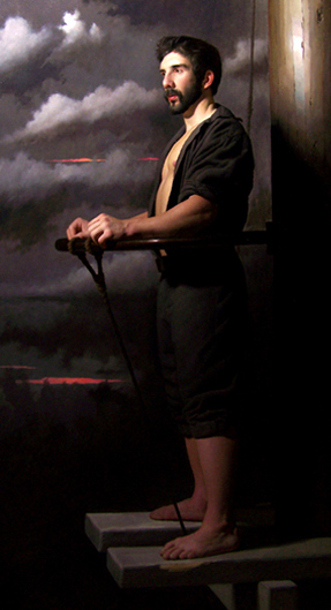
Showing posts with label Woodes Rogers. Show all posts

Wednesday, January 16, 2013

Lady Pirates: The Intriguers' Accomplice

Today's lady may not have actually been a pirate, but she certainly assisted one of the most famous lady pirates of all time - Anne Bonny - into her infamous career.

Mrs. Anne Fulworth is not much talked of in the literature of pirates. In fact, only two chroniclers of the freebooting profession mention her: Philip Gosse in The Pirate's Who's Who and even more briefly, Captain Johnson aka Daniel Defoe in his A General History of the Pyrates.

It probably goes without saying that we know next to nothing of Mrs. Fulworth's background. She steps onto history's stage in the second decade of the 18th century. It is then, probably around 1715, that she is serving as escort to the very young Anne Bonny who is fleeing her home and family to elope with her seaman beau.

Mrs. Fulworth and Miss Bonny arrive at New Providence where Anne and her new husband, according to Johnson "a pardoned pirate, a likely young fellow and of a sober life," are not destined to grow old together. Young Anne meets the notorious Calico Jack Rackham, sparks fly and Gosse tells us that "when Captain Rackam and Anne Bonny were intriguing to run away from the latter's husband... Mrs. Fulworth offered sympathy and advice to the lovers.

Gosse goes on to say that the "intrigue" of the two lovers did not get past the local authorities:

The scandal being brought to the ears of Governor Woodes Rogers by a pirate called Richard Turnley, he sent for the two ladies, "and examining them both upon it, and finding they could not deny it, he threaten'd, if they proceeded further in it, to commit them both to Prison, and order them to be whipp'd, and that Rackam himself, should be their Executioner."

This little bit of melodrama is probably more apocryphal than true, but it does stand out as a juicy tidbit from the already salacious story of the rich girl turned pirate.

There is a very high likelihood, however, that the shadowy Mrs. Fulworth - if she truly existed - stood by Anne once she made the fateful decision to leave her "likely young fellow" of a husband and bunk in with Calico Jack. Most historians agree that Anne became pregnant by her pirate lover at some point and was left by land during her confinement. The stories of Rackham's small harem of women on the island of Nevis not withstanding, it is more probable that the gravid Anne was left in the capable hands of motherly Mrs. Fulworth. It is certainly not unreasonable to imagine that the same woman served as midwife when Anne's time came, and perhaps even looked after the baby girl born of Anne and Jack's unseemly if passionate union.

What became of Anne Bonny, Mrs. Fulworth and the unnamed babe is one of the greatest mysteries handed down to us by the Golden Age of Piracy. Of course, fiction can fill in the blanks but the real story will probably never be known.

Header: The New Baby by John Rettig via American Gallery

Wednesday, May 9, 2012

People: Remembering the Marooner

We decided to return to the yacht. On our way back we landed in English Bay, and saw the cave in which Alexander Selkirk is said to have lived. Whether the story was true or not I am unable to say, but there is no doubt what ever that the cave has been used as a dwelling place. A fireplace and cupboards have been hollowed out in the sides, and there were other evident tokens of a former habitation. At the top of one of the steepest hills, which is said to have been his look-out station, stands a monument erected to his memory, and bearing the following inscription:


“In Memory of Alexander Selkirk. A native of Largo, in the county of Fife, Scotland, who was on this island for four years and four months. He was landed from the Cinque Ports galley, 96 tons, 16 guns, A.D. 1704, and was taken off by the Duke privateer, 12th February 1709. He died Lieutenant of H.M.S. Weymouth, A.D. 1723, aged 47 years. This tablet is erected near Selkirk’s look-out by Commander Powell and the officers of H.M.S. Topaz, 1868.”

~ from the diary of J. Cumming Dewar cruising aboard schooner Nyana at the Juan Fernandez Islands of Chile May 5, 1888

Of course, the Brethren will remember Alexander Selkirk, who was voluntarily marooned after a long dispute with his captain, as the inspiration for Daniel Dafoe’s Robinson Crusoe.

Header: Selkirk Cave c 1874 via Totally Free Images

Saturday, April 21, 2012

Sailor Mouth Saturday: Seaman

This is a term seldom bestowed among seafaring men upon their associates, unless they are known to be pre-eminent in every duty of the thorough-paced tar; one who never issues a command which he is not competent to execute himself, and is deemed an authority on every matter relating to sea-craft.


Thus begins Admiral Smyth’s definition of the often improperly used word seaman in The Sailor’s Word Book. In the terms used by seasoned mariners, a seaman in a sailor’s sailor. Almost without fail he is an officer who has come up through the ranks, if not starting out there, he has at least spent time as a foremast jack where he learned to heave a lead and haul a cable like any other tar. In his capacity of command he has not lost the memory of those days and, indeed, continues to embrace the work of running a ship. He pushes on the capstan, reefs the sails and works the pumps alongside those he commands. He is sound in judgment; no flogging captain has ever been called a seaman. This type of commander runs a happy ship.

From the annals of history, the names of such captains tend to spring to mind more readily than those of a different nature. Horatio Nelson, James Cook and Thomas Cochrane are all premier examples when discussing the Royal Navy. On the other side of the Atlantic, John Paul Jones, Stephen Decatur and David Porter are names that only scratch the surface of such a list. Then too, perhaps to many’s surprise, there were such men among pirates and privateers: Bartholomew Roberts, for instance, was known as an artist, the word used in his era for an expert navigator, and a sober if initially reluctant captain. Woodes Rogers was a right seaman as well, and I would be remiss as an admirer and a descendant to go without including the Baratarians Dominique Youx and Renato Beluche.

In mentioning those last two names, which I always do fondly, the perhaps unfamiliar term seaman-gunner comes to mind. This is a man who has such thorough knowledge of guns and artillery that he is well qualified to both lead a gun crew and train men to the guns. As both men proved on Rodriguez canal that fateful week in 1814-1815, they were both veteran seamen-gunners.

Seamanship is, as Admiral Smyth advises:

The noble practical art of rigging and working a ship, and performing with effect all her various evolutions at sea.

Finally, albeit reluctantly, I must mention that to this day the seaman’s disgrace is another term for that worst case scenario known as a foul – now frequently spoken as fouled – anchor. And a shame it is, too.

Happy Saturday, Brethren; may you all, in your lifetimes or only shortly after, be remembered by your peers as able seaman.

Header: Crow’s Nest by Scott Waddell via American Gallery

Monday, March 26, 2012

People: The Curious Captain Condent

Christopher Condent is a name that gets tossed around a fair amount when discussing the Golden Age of Piracy. Condent, apparently another native of that great breeding ground of sailors, Devon, has his story told with the same consistency we find in tales of bigger names like Blackbeard, Roberts and Morgan. From Charles Ellms to Philip Gosse, all the high points in Condent’s life are hit consistently. Does this mean that they all occurred as they have come down to us? No, but it certainly makes them a bit more creditable.


In The Pirate’s Who’s Who, Philip Gosse does not give a date of birth for Condent. As he was quartermaster aboard a New York merchant when Governor Woodes Rogers sailed into New Providence in 1718, it is probably safe to place his natal year some time in the 1690s. It is a consistent point in Condent’s story, regardless of who is telling it, that his anonymous captain saw fit to hightail it out of the Bahamas when privateer-turned-pirate-hunter Rogers showed up. This is probably a good indication that the New York “merchant” was already a practicing pirate at the time.

According to Gosse and Ellms, the ship was not a happy one. A Native American aboard her had been mistreated by other crew members and, in his rage, decided to take his revenge by blowing up the ship. The sloop had a fair amount of black powder aboard – another good but not altogether telling indication of piratical activity. The injured sailor locked himself in the powder magazine with intent to ignite the powder and blow up the ship. Condent took it upon himself to curtail the man’s plans, jumping into the hold through a hatch and dispatching the malcontent with a pistol shot to the face.

The rest of the crew, still obviously harboring a grudge, hacked the man’s body to pieces. Both Goss and Ellms tell us that the gunner went so far as to remove the man’s heart from his chest cavity, boil or roast it and serve it up for supper. This consistently retold vignette has a curious ring of truth if for no other reason than it is never thoroughly explained. Why eat a man’s heart? The answer, one imagines, might be why not.

After this bloody episode morale seems to continue to flag aboard the merchant-cum-pirate. An English prize, Duke of York, is taken in the Atlantic and a dispute over something to do with it splits the crew down the middle. The captain and his faction take the prize and sail away, while the remaining crewmen elect Condent their new captain.

Condent sets a course for the Cape Verde Islands and manages to take a number of small ships from the “salt fleet”. Next he is cruising near the island of St. Jago where he takes a Dutch ship. He likes this vessel more than his old sloop and trades up, naming her Flying Dragon and hoisting a black flag decorated with three skulls and crossed bones.

Heading back to the New World, Condent begins cruising off Brazil, taking Portuguese ships and torturing their crews. His ruthlessness earns him a reputation but he is clever enough to continue taking prizes in the area by pretending to be a harmless and friendly English merchant. Eventually his tactics earn him a firefight with a Portuguese warship, and Gosse tells us that Flying Dragon is lucky to escape.

Condent sets a course for the Indian Ocean and arrives at the island of Johanna near Madagascar. Here he runs into the former crew of Captain John Halsey who died in 1716. These men were probably happy to join Condent, and Flying Dragon proceeded to take more than one East Indiaman, using the nearby Ile Sainte-Marie as a base of operations.

It appears that the greatest prize of Condent’s piratical career was a galley carrying the Viceroy of Goa. What became of the official is not mentioned, but Gosse indicates that Condent and company took their prize to Zanzibar where “they plundered her of a large amount of money.”

Back home on Sainte-Marie, Condent seems to have second thoughts about piracy. He pays off his men, some of whom chose to settle on the island. Condent and a few others petition the French Governor on Mauritius for a pardon. The Governor is amenable as long as the pirates will break up their ship when they arrive on his island. This they do and they are allowed to settle down. Christopher Condent, now on the straight and narrow, courts and marries the Governor’s sister-in-law.

“A few years later,” Gosse says in summing up his entry on Condent. “The captain and his wife left the island and sailed to France, settling at Saint Malo, where Condent drove a considerable trade as a merchant.”

A rare and curiously happy ending to the story of another brutal freebooter.

Header: Replica of Christopher Condent’s flag via Black Flag Trading Co.

Monday, June 20, 2011

People: The Quicksilver Doctor

As today is the anniversary of the birth of Errol Flynn, one of the greatest pirates ever to grace the silver screen, I’d like to tell the tale of a doctor turned privateer turned author: Thomas Dover.


Born in Britain in 1660, Dover attended Caius College, Cambridge to study medicine. According to his own book, The Ancient Physician’s Legacy to His Country, Dover was a good student who found his studies easy and graduated with honors. Dover hung out his shingle in Bristol where he practiced his art on the local sailors. He was fascinated by their tales of high adventure and particularly Spanish gold to the point where he took it into his head to go to sea. In 1708 he made the acquaintance of privateer Woodes Rogers who was soliciting backers for a voyage to the Great South Sea. Since Dover was not lacking for funds, he became Rogers’ primary backer and, despite his lack of seafaring experience, was made lieutenant aboard Rogers’ Duke.

The expedition was eye opening for Dover as Rogers cruised the Atlantic coast of South America, rounded the Horn and came up on the island of Juan Fernandez. It was here, in February of 1709, that the crew discovered that famous marooner, Alexander Selkirk. Dover would himself administer to the man who would become Rogers’ quartermaster and later inspire Daniel Dafoe’s Robinson Crusoe. Not long after this incident, Rogers took a Spanish brig which he renamed Bachelor, putting Dover aboard her as captain. This would not be Dover’s biggest endeavor on the voyage, however.

In April, Rogers reached Guayaquil in the Spanish Provence of Quito. The city was famously sacked but, despite the wealth acquired, many of the crew fell ill with plague. Dover set to work, dosing the men with Peruvian bark and bleeding them profusely. He tells us that he took 100 ounces of blood from half as many men, to “… less their fevers and rid them of the ill humors brought on by a Tropical climate.” Dover was proud to say that most of his patients survived.

Dover turned the Bachelor homeward before Rogers followed. On the way, he took a Spanish ship full of silver which he valued at a million pounds. The good doctor returned to Bristol in 1711, considerably wealthier for his time and investment.

Thomas Dover moved his medical practice to London in 1713, where he wrote his book. In it, he recommended dosing with mercury as a virtual cure-all. The book was popular, running into seven printings, and his advice earned him the moniker “The Quicksilver Doctor”. He also developed a well regarded purge known as Dover’s powder which, according to Philip Gosse in The Pirate’s Who’s Who, was still in use in the mid-1920s.

Dr. Dover died in 1742 and is buried in London. His long life, though not much remembered now, was certainly an eventful one.

Header: Errol Flynn as Dr. Stephen Blood from IMdB

Wednesday, May 4, 2011

The Pirates Own Book: "A Great Villain"

Charles Vane was one of those who stole away the silver which the Spaniards had fished up from the wrecks of the galleons in the Gulf of Florida, and was at Providence when governor Rodgers arrived there with two men-of-war.


Thus begins the 22nd chapter in Charles Ellms’ The Pirates’ Own Book entitled “The Exploits, Arrest and Execution of Captain Charles Vane”. This particular chapter is surprisingly accurate in its brief retelling of the life a Vane, an Englishman who began his piratical career under Captain Henry Jennings. Jennings is most noted for his 1716 attacks on Spanish wrackers who were pulling up the riches lost when their treasure fleet sunk off the coast of Florida in 1715.

Ellms is usually pretty shy about giving specific dates but he speaks of Vane being at the helm of his own ship by May of 1718. He goes on to note that Vane arrived at New Providence, The Bahamas just as the new Governor was sailing into the bay to put down piracy. Vane, who refused to take the King’s pardon, sailed out to the Caribbean again “… with their piratical colors flying, and fired at one of the men-of-war.” Though in the end Vane would be branded a coward by his own men, he started his pirate career with a defiant lack of reverence for any authority.

Ellms tells us that Vane and his men went out on a prize-taking spree and, as usual, details each prize as if he has a checklist in front of him. In short order, though:

… Vane went to a small island and cleaned; where he shared the booty and spent some time in a riotous manner.

By the end of the summer Vane is leading a small flotilla of prizes that he has given to his various lieutenants to command. Ellms notes that Vane “… always treated his consorts with very little respect…” and his attitude begins to rankle among the men in charge of these ships. The men “…caballed together…” and determined to part with Vane as soon as an opportunity arose. Led by Captain Yeates, the ships did just that and headed for the outer banks south of Charleston in what is now South Carolina. It is here that Yeates petitions for the King’s pardon and in the process appears to inform the Royal Navy of Vane’s favorite hunting grounds.

One Colonel Rhet is dispatched to find Vane and bring him to justice but he was given false information by a merchant ship previously taken by Vane. This was not through any fault of the seaman aboard the merchant but in fact a clever ruse by Vane: he had fed his prisoners incorrect information on purpose. As usual with Ellms, the plot thickens.

Meanwhile, heading in the opposite direction from Rhet, Vane has met up with Blackbeard himself, Edward Teach. Both pirates having had good luck with prizes, they decide to take a break from plundering “… and mutual civilities passed between them for some days.”

Back out at sea in October, Vane’s ship meets a French man-of-war. Though Vane and his First Lieutenant Robert Deal want no part of the Frenchman, quartermaster Jack Rackam and several members of the crew argue otherwise. Though the French Navy ship is avoided, the discussion turns to argument and Rackam accuses Vane of cowardice. A vote is called for and the majority decide with Rackam, who is made captain in Vane’s stead.

Vane and his few remaining followers, including Deal, are given a provisioned sloop and sent off on their own. They head for the Bay of Honduras and have a little luck there, finally deciding to winter at the Island of Barnacho. Setting out in February, Vane’s sloop is hit by a hurricane and wrecked. Ellms tells us that “most” of the men drown but that Vane survived “… reduced to great straits for want of necessaries.”

In fact Vane’s sloop did wreck off Honduras and he and one other man were cast ashore on an unpopulated island where they survived alone for some time. Ellms adds a nice twist to this final stretch in Vane’s career by having a ship captained by an old “acquaintance” of Vane’s put in at the little island for water. Captain Holford immediately recognizes Vane but refuses to rescue him saying:

“Charles, I shan’t trust you aboard my ship unless I carry you as a prisoner, for I shall have you caballing with my men, knocking me on the head, and running away with my ship pirating.”

Vane, of course, wants no part of being taken prisoner and makes a show of outrage at Holford’s accusation. A rather amusing exchange ensues in which Vane asks Holford how he should get off the island and Holford tells him to steal a fishing dory from one of the locals. When Vane says he couldn’t steal a boat Holford replies:

“Do you make it a matter of conscience… to steal a dory, when you have been a common robber and pirate, stealing ships and cargoes, and plundering all mankind that fell in your way? Stay here if you are so squeamish!”

The point is well made but this entire interlude appears, unfortunately, to be a piece of fiction. Needless to say, Holford sails away leaving Vane to argue with his conscience. Another ship soon appears and rescues Vane but the pirate’s luck has run out. Wouldn’t you know that this ship’s captain is a close acquaintance of Captain Holford, and that the two friends’ ships meet, and that the captains get together for a meal, and I’m quite certain you can figure the rest out.

In fact Vane was rescued only to be recognized by one of the rescuing ship’s crew who served on a merchant taken by Vane in the not so distant past. Either way, Vane is brought in to Jamaica, tried and hanged along with his friend and former first mate Deal. Ellms ends this chapter with the thought that:

It is clear from this how little ancient friendship will avail a great villain, when he is deprived of the power that had before supported and rendered him formidable.


Header: Vane arrested by Captain Holford from The Pirates Own Book via Project Guttenberg

Monday, April 4, 2011

History: The First Sack of Cartagena

By the mid-1500s, the city of Cartagena was the jewel in Spain’s New World crown. The city, which would rival Havana in its cosmopolitan splendor, was awash in wealth of every kind imaginable. As a large port, Cartagena was a destination for goods and raw materials from all over South and Central America. Spices, exotic animals, gold, silver, gems and people, just to name a few, would be loaded onto the infamous treasure galleons for shipment first to Cuba and then on to Spain. It is little wonder that over the course of two hundred and fifty years Cartagena was a consistent target for seadogs, buccaneers and pirates.
Many of the attempted raids were repulsed, or never got off the drawing board at all. Henry Morgan thought about it but decided on Panama instead. Treasure ships were taken as they left Cartagena by men like Woodes Rogers and Laurens de Graff. Then, in 1811, Cartagena turned the tide and declared her freedom from Spain. At that point the Governor began handing out letters of marque to men like my own ancestor Renato Beluche, sending them ironically off to prey on Spanish shipping. But before all that, in 1586, Francis Drake proved that the infamously well fortified city could be taken, emptied of its riches and ransomed by the right leader with the right force.

By January of 1586 Drake, the once and future pirate, was in possession of a letter of marque from Queen Elizabeth I. He commanded a fleet of ships headed by his six hundred ton flagship Elizabeth Bonaventure. 2,300 soldiers accompanied his equally numerous sailors and the air of a naval presence settled upon his flotilla. Having proven that piracy and/or privateering against the Spanish could be both personally profitable and patriotic, Drake was a national hero with no intention of slowing down. England and Spain were at war, and the seadog was bent on doing every damage possible to the enemy. Particularly the enemy’s wallet.

On January 10, Drake and his men landed at Hispaniola, captured and sacked the capital of Santo Domingo. The city was burned, everything not nailed down was loaded into prize ships and sent back to England and Drake was paid a ransom of 2,500 gold ducats. The carnage and rapine ended on February 11, when Drake and his army sailed off to the next golden shore.

That unfortunate harbor was Cartagena. Considered virtually impenetrable until the fateful morning of February 19, 1586, the city’s fall was a combination of excellent strategy on Drake’s part and horrible bad luck on the Spanish side. Cartagena’s Viceroy Pedro Fernandez de Bustos had plenty of warning regarding Drake’s assault on Santo Domingo as some of the wealthier refugees had fled to his city. He had managed to assemble a force of some 500 armed soldiers and enlisted the aid of the well known and mellifluously named Admiral Pedro Vique Manrique who had two large galleons at anchor in the harbor. Unfortunately, the stories of Drake’s massive flotilla seemed to erode the courage of both leaders, and their men grew just as anxious.

Drake sailed right into Cartagena’s outer harbor on the evening of the 19th. He immediately landed 600 soldiers under the veteran Christopher Carleill who took his men north to assault the city from the inland jungle. Meanwhile Drake’s sailors took boats out to scout the fort of Boqueron under cover of darkness. At dawn, Carleill engaged a group of Bustos’ soldiers, causing a break in ranks that scattered the Spanish.

Meanwhile, Admiral Manrique grounded both his galleons and his men, too, left their posts. Jumping ship, they ran for the jungle rather than face the ruthless ladrons. Drake won the day through terror more than muscle. By the 21st the city had officially fallen. Interestingly, only seven Spaniards were killed in the two day engagement while some 30 Englishmen lost their lives. The citizens who could escaped to the jungle. Those left behind were “persuaded” to give up anything of value. Buildings – including the Cathedral – were stripped of all their wealth. Finally Bustos met with Drake and ransomed his unfortunate city for 107,000 gold ducats. Drake, being a businessman, gave Bustos a receipt for his payment.

Drake and his men sailed off with their haul in April, touching at Virginia before returning to England. The unprecedented success of Drake’s cruise brought him further recognition from his monarch and drew the attention of other like-minded men. Privateering became a respected profession in Britain, eventually leading to the establishment of one of the greatest Navies the world has ever seen. Modern scholars estimate that during the period from Drake’s sack of Cartagena to the end of England’s war with Spain in 1603, around 150 privateering ventures were mounted in Britain every year bringing home an average of 200,000 pounds per year in Spanish prizes. And only the Spanish could argue with that.

Header: Chart of Drake’s Raid on Cartagena by Baptista Boazio

Monday, March 21, 2011

Home Ports: The Island Of Women

Isla Mujeres, off the Caribbean coast of Mexico, may seem inconsequential when one is looking at a map. It’s relatively small, particularly when compared to its southern neighbor, Cancun. It is long and thin, shaped something like a finger, and it is almost entirely at sea level. The location it occupies, however, jutting out from the Yucatan peninsula at the bottom of the Gulf of Mexico, made it the perfect place for keeping an eye on shipping in the waters near by. The perfect place, in other words, for pirates and privateers.

The incredibly lush, topical island was originally part of the Mayan principality of Ekab. Isla Mujeres was sacred to their goddess of fertility, healing and death, Ix Chel. The Mayans built temples to her on the island, which they did not populate but only visited for rituals dedicated to the goddess whose totem was the rabbit. When the Spanish arrived and explored the island they found the many shrines to Ix Chel with numerous statues of the various forms of the goddess, from maiden to crone. They called the place the Island of Women because of this and the name stuck.

Like the Mayans before them, the Spanish did not populate the island but did exploit its resources including an abundance of fish and the ponds known as “salinas” that produced salt. For centuries the island was a fishing spot for natives of the Yucatan and as European trading vessels began to ply the waters in the straight between Mujeres and Cuba now known as the Yucatan Channel, they began to sell their catches to ships that had put in to the island to refresh their water. With the dawn of the buccaneers, and the raids undertaken at Vera Cruz and Panama by Captains like Laurens de Graff and Henry Morgan, Mujeres became a favorite stop. Ships would drop anchor and men would go ashore not just for food and water but to clean up, rest and divvy up booty from the last raid.

The Golden Age of Piracy saw the same kind of traffic on Mujeres. Some household names probably called at the island, including Blackbeard, Sam Bellamy and Calico Jack Rackham to name just a few. Both Woodes Rogers and William Dampier mentioned the place in their journals. It was also a destination for the runaway slaves known locally as maroons whose word-of-mouth network had it on good authority that they could find help at Mujeres from friendly natives.

The privateers of the early 19th century used Mujeres extensively. Many of them travelled almost constantly from Louisiana, Texas and/or Florida to South American destinations like Cartagena and Caracas, making Mujeres a handy stop. The only known freebooters to take up residence on the island were the Laffite brothers. After they abandoned their Galveston operation in 1820 they moved to Mujeres hoping to establish another privateering stronghold. Their accommodations would have been meager since they apparently never built any proper structures. Jean returned to the sea as a legal privateer for Bolivar and Pierre remained on the island. Native fishermen would later recall him as a friendly gentleman who told good stories. He would die of fever on the mainland in 1821.

Today Mujeres is a tourist destination. Less crowded and built up than Cancun, Mujeres boasts only a few luxury hotels, the remnants of a temple to Ix Chel and beautiful beaches. Day trippers come from the mainland but at night things settle down and a visitor can still walk the broad, Caribbean beach where Pierre Laffite told stories and kept an eye out for his brother’s return from the sea.

Header: Isla Mujeres today

Saturday, January 29, 2011

Sailor Mouth Saturday: Rum


Kill-Devil: New rum, from its pernicious effects.

The above entry in The Sailors Word Book is, as usual, succinct and to the point. New rum, made with cane molasses and not aged more than a day or two, is not only pernicious in effect but near heinous in taste. This did not stop the largely British and almost universally poverty stricken immigrants in Barbados during the first half of the 17th century from drinking on average 30 drams of it per day, per person. The famous French priest Jean Baptiste Labat who spent so much time among the buccaneers called the spirit “rough and disagreeable”. He would also have called it guildive, the French pronunciation. All the same the habit of downing it like water – for everyone knew water would kill you – spread pervasively. Especially aboard ship.

But why is it that we no longer call this drink kill-devil and now refer to it as rum? Was it a simple transition of language or did something else spark the change? Being a curious student of the etymology of words, I did a little digging and today I’d like to share what I found out.

According to my old mate Webster, the word comes from the French rebouillir meaning to boil again. The dictionary curiously adds that the etymological ancestor of “rum” may actually be the French rumbouillet, meaning gooseberries which became rumbullion in English and was then shortened to rum.

In fact the idea that rum is simply short for rumbullion is posited by more than one expert. In his fascinating if sometimes misleading book about the effects of rum on society, And a Bottle of Rum, Wayne Curtis notes:

The most likely derivation is that rum is a truncated version of rumbullion or rumbustion. [These] both first surface in the English language around the same time as rum, and both were British slang for “tumult” or “uproar”.

Curtis goes on to say that rumbustion would have been used the way modern English speakers use the word “rambunctious” and notes that it “… brings to mind fractious islanders cracking one another over the head in rumbustious entanglements at island tippling houses.”

It was Hans Sloane, a naturalist travelling the Caribbean in the early 18th century, who stated unequivocally that “… rum is called Kill-Devil, for perhaps no year passes without it having killed more than a thousand.” To the Dutch it was kiel-dyvel and the old French guildive is still in use in Haiti today when referencing some of the less than palatable mashes that get passed around at country gatherings and in places like Cite de Soleil, the slum in Port-au-Prince.

The distasteful kill-devil that was imbibed virtually right out of the still was sent all over the world in oaken casks by the 18th century and time in the barrel changed its nature. Aged rum was and is smooth, agreeable and easily transported. It could last for not weeks or months but years aboard ship and where buccaneers and pirates had begun the trend toward its use as a shipboard ration, the Royal Navy, and eventually its U.S. offspring, formalized the habit. Soon enough grog, that mixture of water, rum and citrus, was born. However, as Curtis notes, “If you come across a pirate and he bellows for “grog,” he is, in all likelihood, not a real pirate”. Well said indeed.

Most probably the significantly improved taste of aged kill-devil brought with it the change to rum. Other origins of the word rum mentioned in various sources include the Roma (gypsy) word rhum meaning “potent”. There is also the oft quoted story that rum comes from saccharum, the Latin word for sugar. It was also suggested in the 1820s that the word came from the British slang for delightful or awesome as in “having a rum go”.

Whatever the origin of the name, rum was and is the very favorite tipple of pirates of the New World. As Woodes Rogers, successful privateer turned Bahamanian Governor, once wrote of rum: “Good liquor to sailors is preferable to clothing.” What more is there to say?

Header: Spiced Navy Rum via Feitelogram Files

Wednesday, November 24, 2010

History: The Siege Of Guayaquil

The story of Woodes Rogers’ circumnavigation of the globe is old news to those who take a shine to the Golden Age of piracy. There were the generous merchants of Bristol, England who mounted the privateering expedition, the inclusion of French privateer, expert pilot, writer and naturalist Guillaume “William” Dampier, the surprise rescue of Alexander Selkirk who later became the model for Daniel Dafoe’s Robinson Crusoe, and of course the nearly bungled taking of the City of Guayaquil on the Pacific coast of what is now Peru. The story is larger than the sum of its parts as Rogers made history – and a fortune – raiding Spanish interests in the Pacific, a first for any British privateer since Drake. But the parts are pretty interesting in and of themselves. Today, let us focus on the raid at Guayaquil using Dampier’s journal as our always accurate and frequently amusing guide.

The expedition set out in 1708 and rounded Cape Horn at the base of South America in early 1709. The timing was good from a standpoint of season but conditions are never amicable off Tierra del Fuego and by the time Rogers’ brigs, Duke and Duchess, had made the Pacific Ocean they were both in need of repair. The expedition was also short on prizes, not having spotted one Spaniard between Bristol and Chile, and the hands were starting to grouse. Rogers tightened his discipline but prayed for a prize.

On March 15th, things started to look up in the form of “…a scrap of a vessel” that Rogers had no trouble taking. The prize ship and her crew were of more interest to the privateers than anything aboard her and, with a refit, Rogers planned to use her “… as a courier or for river work”. Under the light of a full moon, Dampier writes poetically, Rogers put his flotilla of three in at the Islands of Los Lobos.

Los Lobos, interestingly, was not named for wolves but for sea lions known as lobos marinos or sea wolves. Dampier, with his naturalist flare, writes of these animals as “… noisy stinking brutes so fierce that one of them painfully mauled a Dutchman off the Duke, and nearly dragged him to his death in the surf.” He then disdainfully tells us that a hunting party brought back what they thought was a turkey. It turned out to be a vulture, “… smelling worse than the seal.” Despite these troubles of a seafaring life, the new ship – christened Beginning – was refit, Duke and Duchess were patched up and the expedition continued.

The prizes began to mount but, along with them, so did scores of Spanish hostages, seamen and African slaves. By April 12th Rogers had three new prizes but was running out of water. Pulling his officers together, including Dampier and Selkirk, now master aboard the prize renamed Increase, he came up with the plan to raid the city of Guayaquil. The officers agree but the crew has other ideas. As Dampier puts it, they were seamen and “… would fight any ship afloat, but they had not signed on with the intention of storming towns ashore.” Unlike Morgan’s hearty buccaneers, these English sailors weren’t eager to become infantry.

Rogers quickly hit upon just the thing to turn his men to his way of thinking. He upped the ante on prize goods by changing his Articles’ rules on plunder. It was written down that anything a privateer seaman could carry out of Guayaquil, with only a few exceptions including “… Women’s earrings with loose diamonds, pearls and precious stones”, would be his to keep. One has to imagine that the exceptions would be put into the general prize pot to be sold for hard cash which would then be distributed.

The men went for it and, rubbing their hands together at their potential haul, set a course north and east for Guayaquil. The port lay beyond the Island of Puna which was used as a look out spot, and a wide gulf beyond. Rogers’ plan was to use pinnaces armed with swivels as transport for the first wave of his men, with backup behind them in the form of Beginning and her crew. Two more ships were sighted and eventually taken on the way to the coast. The boarding action saw the unfortunate death of Rogers’ younger brother, John. Now burdened with over 300 Spanish prisoners, Rogers had no time to mourn. He stuck with his plan of attack which would occur under cover of night, secured most of his prisoners aboard his ships and dropped anchor just beyond Puna.

The island put up little resistance and Rogers collected the captured Lieutenant from the outpost there to use as a translator at Guayaquil. The crossing of the gulf, however, was not so smooth. Rogers said in his journal: “I had rather be in a Storm at Sea than here” and Dampier grumbled of days passed “… swatting mosquitoes in the mangrove shallows” so as not to be detected. Finally the opportunity to attack came but, as the boats rounded the last point toward the city, they found it alight at midnight with church bells ringing, people in the streets and beacon fires blazing. Not knowing if they had been spotted, the privateers fell back.

Though Rogers strongly advocated for an immediate attack, his officers decided that negotiating a ransom would be more prudent. The local Governor, who comes off as a cagey but decidedly dishonest sort, initially proposed a payment of 50,000 pieces of eight along with purchase of any stores the privateers might have in their prize ships. This was music to British ears and they agreed to the terms immediately. Just as immediately, Governor Solis y Pacheco began to stall. He failed to call aboard the Beginning at the designated time and sent an emissary with a clearly manufactured story that turned Rogers’ attitude sour. The emissary was given an ultimatum: either the Governor appeared with the promised specie by 7:00 the following morning or the privateers would storm the city.

The Governor showed up but with a much less attractive ransom – 30,000 pieces of eight and no mention of prize goods at all. Rogers had enough at that point. He allowed the Governor to pull back to his city while the privateers prepared to attack. As Dampier puts it, the Guayaquil militia “… made a formidable Show in respect to our little Numbers” but when Rogers’ men faced down the cannons in the church square, the militia scattered. Rogers took the city without a man lost, but the Governor’s stalling had allowed his wealthier citizens to gather up their treasures and evacuate.

A day of ransacking turned up nothing until Lieutenant Connely and Master Selkirk got a tip from a local Native as to where the prominent citizens may have run off to. This led to the amusing antidote pictured at the header (an engraving use in the published version of Rogers’ own journal). They found houses up river from the city wherein were secreted the Donas of Guayaquil. These ladies had their family jewels wrapped “…about their Middles, legs and thighs…” beneath their clothes. As Dampier tells us, clearly with a grin:

… the Gentlewomen of those hot Countries being very thinly clad … our Men by pressing felt the Chains etc. with their Hand on the Outside of the Lady’s Apparel…

This quick frisking led not only to a sack full of booty but a thankful response from the ladies who were allowed to remove their valuables themselves rather than being stripped or worse. They offered Rogers and his men a splendid luncheon and “… broke out a cask of choice liquor."


At last the Governor relented and agreed to pay the 30,000 pieces of eight to Rogers at Puna Island within six days. The British privateers had their hands full getting load after load of plunder out of Guayaquil and Dampier notes that more than one fainted due to exhaustion and the “… deadly heat.” Rogers and his men made Puna on April 28th. The ransom was delivered as promised and the expedition turned west into the Pacific. Rogers would return to Bristol in 1711, 150,000 pounds richer than when he left.

Sunday, July 25, 2010

Seafaring Sunday: Two Giant Seamen

July 27, 1718: Former privateer and pirate Woodes Rogers (seated at right) arrives in New Providence, the Bahamas at the head of a flotilla of four warships. He is sworn in as Governor of the British colony immediately, and effectively ends the use of the island as a pirate stronghold.
July 25, 1866: Captain David Glasgow Farragut of "Damn the torpedoes!" fame is commissioned the U.S. Navy's first Admiral in recognition of his heroism and leadership during the Civil War.
His adoptive (rumors said natural) father, Commodore David Porter would have been proud.

Thursday, June 24, 2010

Pathetic Pirates: The Ladies' Man

Bless John "Calico Jack" Rackham. If you step back and look at the picture that history paints, he's actually a model for the modern mythology of a Golden Age pirate. Reputed to be charming and handsome, he took on a moniker (given, the story goes, because he favored cotton breeches with "strypes") that has come down to us as the quintessential pirate name. There would be no Jack Sparrow were it not for Jack Rackham. Glorious indeed.

But step up to the microscope and the picture turns from rosy to gunmetal gray. Rackham was nothing more than a small time bootlegger who blew his first command and sought comfort in booze and ladies. The ladies in question, Anne Bonny and Mary Read, are probably the only reason that Calico Jack's name is so widely known today. I'm not sure that's the way he would have wanted it.

John Rackham was probably a child of England's colonies in America but where and when he was born is anyone's guess. Most historians say the Carolinas or Jamaica late in the 17th century. His name first appears historically in 1718 when he is serving as quartermaster aboard pirate Charles Vane's sloop. When Rackham accused Vane of cowardice, the crew agreed. They elected Rackham Captain and put Vane in a small boat with a few loyal men before sailing off.

Rackham headed out for Cuba, which he seems to have always favored as a base, and probably managed to lose his sloop when his crew went ashore. Again this is not a verifiable story but one way or another Rackham ended up in New Providence without a ship just as Governor Woodes Rogers was handing out pardons. Rackham took his and may have made a go of an honest life.

Around the same time, Rackham met pretty Anne Bonny and her husband James. The Bonnys were in New Providence seeking their fortune (James, who is so much of a cypher that one wonders if he ever really existed, is alternatively called a sailor or a pirate). Rackham and Bonny appear to have been attracted to each other, but whether this had to do with love or money is open to speculation. Bonny, in full female dress, boarded Rackham's ship in early 1719. Their plan was a return to piracy.

Rackham's success and failures throughout the year are not catalogued but at some point, Mary Read joined his crew disguised as a man. I won't go into the details of that full-blown fiction as you can read it here. Read was found to be a woman, some say through a friendship with Anne, and Rackham's crew seems to have taken it all in stride. Rackham took some smuggling vessels and/or fishing boats off Cuba, and was back in Nassau by the summer of 1720.

For reasons one can only speculate about, Rackham stole the sloop William and sailed out of Nassau harbor with his crew, including the lady pirates, that same summer. Rackham's escapade was ill timed. Governor Rogers was out for blood and he would not tolerate any backsliding by pirates who had taken his pardon. In August of 1720 he issued a proclamation against Rackham that listed "...Anne Fulford, alias Bonny and Mary Read."

Cruising the coast of Jamaica this time, Rackham got himself into hot water with Governor Lawes when he bungled a raid on a sugar plantation or boat builder (there is no definitive documentation other than a mention of "...Rackham, pirate, raid by land"). Lawes sent privateer Captain Johnathan Barnet to bring William and her crew to justice.

On October 22, Barnet found William hove to in Negril Bay. The crew was celebrating the taking of a fishing vessel found to be smuggling a huge cash of rum. By the time Barnet called for Rackham to surrender, everyone aboard William with the exception of her distaff side was drunk. Barnet boarded and got resistance only from Bonny and Read. By the next day William's crew was under arrest. Their trials for piracy began November 16.

Rackham's fate is, by now, old news. Convicted, he was hanged at Deadman's Cay near Port Royal, Jamaica. His body was tared and gibbeted for display and the spot where he died is now called Rackham's Cay. Anne and Mary, of course, went on to plead pregnancy and escape hanging; Mary via death by fever, Anne, it is widely speculated, via the help of her rich father.

Calico Jack Rackham's career as a pirate seems to be a microcosm of what most pirates would have known. Drunken highs upon capturing a small prize, hungry lows on land and nothing to show for it at the end. His charm left us his name and his "stryped" breeches. And of course, his love for the ladies. Considering that we still know that much, maybe it's enough.

Thursday, April 22, 2010

People: Bahamanian Governor

Woodes Rogers (right in profile to conceal his facial wound) in New Providence with his daughter Sarah (seated) and his son William Whetstone painted by William Hogarth, 1729

As we saw yesterday, Woodes Rogers had a life full of adventure. At the age of around 33, however, he was penniless, separated from his family and probably imagining a trip to debtor's prison. The sea had always been a source of income for Rogers and, as is typical of men born to the waves, he went back to it.

Little is known of how Rogers financed his next project but by 1714 he was captaining a slaver working the trade between Madagascar and British colonies along the Indian Ocean. Doubtless it was dirty work and one source attempts almost apologetically to infer the Rogers was actually pirate hunting and trying to establish an outpost on Madagascar for the British East India Company. Unfortunately the source (The Republic of Pirates by Colin Woodard) isn't clear on where this information came from.

Woodes was back in London by 1715 to find that Queen Anne was dead and King George I was on the throne. George was determined to put down the rampant piracy originating in his colony of New Providence (modern day Nassau) and he had issued an unequivocal order regarding the situation. He would send a permanent governor to New Providence to reform the "nest of infamous rascals" either via Royal pardon or execution. It seems that Woodes had some friends close to the King, or something like that, because he managed to be chosen as Governor of New Providence in 1717.

Rogers formed a company to fund this undertaking (the Crown conveniently offered only nominal backing) and investors threw money in hoping for the kind of profits that had come out Jamaica and Barbados with their sugar cane and rum. When Woodes set sail in April of 1718 he was in command of seven ships laden with soldiers, colonists, supplies including weapons and livestock. The passage took only three months, and Rogers fleet - now reduced to six ships as one was required to turn back due to leakage - cruised into New Providence harbor in July.

Captain Vincent Pearce had preceded Rogers flotilla by five months so the pirates still on New Providence (many, like our old friend Edward Teach, had already left) knew about the King's pardon. Those who stayed, with the exception of Charles Vane who tried to blow up the British with a fire ship which ultimately fizzled, planned to take the pardon and then go back to pirating once Rogers agreed to a cut of their plunder. To Rogers' doubtless surprise, he was greeted (once Vane had escaped) with huzzahs and haloos at New Providence Towne.

Woodes Rogers knew that the pirates' smiles were as black as their hearts and he had no intention of believing their oaths of fealty to King George. As he settled in, the pirates - to their own surprise - found that their new Governor had no intention of taking their bribes, either. What Rogers did next, though, should have astonished them even more. The Governor offered each man, regardless of his rank at sea, a chance to become a landowner. If a man would clear land and build a shelter, he would receive 120 square feet of said land free and clear, no strings attached. Fancy deeds had already been drawn up. The possibility of owning real estate, something none of these men could ever have done in Europe, was only a few axe swings and a lean-to away.

Rogers' intent was not to make pirates landed gentry but to give them a stake in the island. It was a critical issue. Rogers had received word that Vane was planning to put together a flotilla, breech the harbor and take back New Providence. The island's crumbling fortifications needed rebuilding, and only men who had an interest would do such work. When pirate leaders like Benjamin Hornigold and Henry Jennings stepped up and took the offer, many regular man jacks followed suit.

Shrewd and well-spoken, Rogers then dropped the bomb that the Spanish, the hated enemy of so many of the "former" pirates, were planing to attack New Providence. Work on the fortifications began immediately and in earnest. Meanwhile, he approached Hornigold and Jennings to speak privately about the situation with Charles Vane. The two Captains did a deal with their Governor: they would receive letters of marque, making them legal British privateers, and in return they would coincidentally hunt pirates on their cruises.

Neither of the new pirate hunters managed to catch up with Vane (he was later hanged in Jamaica) but they did catch others who had turned back to a life of freebooting. In December, Rogers hanged eight men brought in by Hornigold. These were pirates known to the locals, who heard one of the men say "We've a good governor, but harsh" before he met his end. The general feeling that going back to piracy might be an option seemed to fade. Men went back to work on the fortifications - and on their land - instead.

Spain did make an attempt on New Providence in 1720, but they turned away voluntarily due to problems with France on the Gulf coast. Rogers, however, was now having financial problems. His backers were no longer sending money as his island was not producing the sugar cane they had expected. He sailed to Charleston to plead his case there but only managed to fall ill and then lose a duel. Frantic for money, Rogers returned to England and arrived in June or July of 1721. He was promptly arrested and confined in debtor's prison.

Rogers, probably due to the efforts of his children and his fame as the hero of those South Sea adventures, was finally forgiven his debts and released from prison in 1722. He spent the next three years petitioning the King for redress. Though this was never afforded him, he was granted a pension in 1726 and reappointed Governor of New Providence in 1728.

Woodes Rogers, now in his 48th year or beyond, was no longer the man of action that had once swayed pirates and built fortresses. He tried to squeeze a profit from New Providence by way of farming and seafaring but his attempts at taxation and tariffs were blocked by the island's Assembly, which had been formed in his absence. His health began to fail, perhaps as much out of disappointment as simple illness. He again visited Charleston for a while, trying to find a cure for what ailed him, but nothing seemed to help. Rogers returned to New Providence and retired from public life. He died in July of 1732.

The motto of British New Providence and the Bahamas was "Piracy expelled Commerce restored", very much in honor of the man who did just that. Merchant, privateer, adventurer and Governor, Woodes Rogers was a force to be reckoned with. And certainly a man never to be discounted, no matter how low he might seem to be.

Wednesday, April 21, 2010

People: Pacific Privateer

Statue of Woodes Rogers outside the Hilton Hotel, Nassau, the Bahamas

Today's merchant turned privateer turned Governor is a man whose sweeping story will take me two posts - at least. Woodes Rogers won and lost fortunes, circumnavigated the globe, found and forfeited love and hanged pirates en mass all in the span of 53 years. He is an impressive and controversial figure and it's well worth the time spent studying his all-encompassing life. Aside from Drake, Morgan and Nelson, I cannot think of an English seafarer who did or saw more.

Rogers was born the eldest son of merchant seaman Woods Rogers in Poole, England some time around 1680. The elder Rogers was a sea Captain who owned several ships that worked the Newfoundland fishing trade. This meant that Dad was gone a lot, sometimes for nine or ten months at a time. The family was small and young Woodes was probably sent to a local school for boys to keep him busy. It appears that there was never any doubt as to what trade Woodes would take up as he grew to manhood.

Around the age of 10, Woodes moved with his family to the port city of Bristol which his father's fleet called home. Within eight years he was aboard one of those vessels learning the family trade. Though Woodes does not appear to have been a cunning seaman, he was certainly capable. The hardships of the Newfoundland fishing trade probably made or broke a man, and Woodes seems to have come away in one piece. By 1704, he could command a vessel.

In January of 1705, Woodes made what appeared to be a rather brilliant move in marrying Sarah Whetstone. Sarah, younger then her groom and said to be "exceedingly fair", was the daughter of the well-heeled Admiral Sir William Whetstone. The Admiral set the young couple up in a comfortable home in Bristol and presented Rogers with a new ship for his merchant fleet, the modestly christened Whetstone Galley. When Woodes' father was lost at sea the following year, things appeared to be perfectly in place for the family business to take off with 26 year old Woodes Rogers at the helm.

For a while things did go rather well. The business flourished. Sarah bore three healthy children - a son and two daughters. Rogers managed to attain four letters of marque against the Spanish and French and Whetstone Galley, who carried one of these commissions, ventured into the lucrative slave trade. Unfortunately, the bottom of Rogers' first attempt at privateering fell out early. All four of his privateers were captured and libelled by the French, leaving the Rogers family nearly penniless. With a wife and three young children, the prospects looked grim for Rogers.

Just as things seemed most bleak, an old friend of Woodes' father appeared with an alluring proposition for the new head of the Rogers' operation. William Dampier was a navigator and naturalist who had just returned from a disastrous foray into the South Pacific. He cruised with the hapless Captain Stradling whose ill-kept ship Cinque Ports had been a cause for mutiny. The ship finally sank due to lack of maintenance.. Rogers paid close attention when Dampier proposed that Rogers lead a privateering expedition.

Thanks to the good will of the merchants of Bristol and Admiral Whetstone, Rogers was able to fit out two formidable frigates. Duke, the larger of the two, would be captained by Rogers himself with Dampier as sailing master and navigator and Rogers' younger brother as Lieutenant. The second ship, Duchess, was initially helmed by Simon Hatley. Commissions in hand, Rogers kissed Sarah and the kids and said farewell to Bristol August 1st, 1708.

Rogers ran up the Irish coast for supplies and lost some of his men there. He recruited others in Ireland but most were not British (many, in fact, were displaced Dutchmen who could easily be called pirates) and they grumbled at being told they could attack no shipping other than French or Spanish. The mood aboard both ships as they made for the Caribbean was probably rather gray.

The expedition put in at Tenerife to stock up on warm blankets and rum for the cold trip around Tierra del Fuego and then headed south. Rogers' ships went so far south that - unbeknownst to them - they were closer to as yet undiscovered Antarctica than to South America for several days. Rogers himself wrote that for all he knew, his ships were "...the furthest that anyone has yet been to the southward."

At last the turn north was made and, as Duke and Duchess passed the coasts of what would one day be Chile and then Peru, Rogers eased his ships toward Juan Fernandez Island to replenish their water. His look-out spotted a fire on the island. Duke effected the famous rescue of marooned sailor Alexander Selkirk (read more about the incident here) in February, 1709. Interestingly, Selkirk had been one of the Cinque Ports mutineers.

Rogers continued up the coast toward the Spanish colony of Quito, taking Spanish ships along the way. Pulling into Guayaquil in modern Ecuador, Rogers blockaded the little port and took the town hostage. When the Governor would not negotiate with the raiders, Rogers' sailors famously frisked the local matrons (to the ladies' unending dismay) for hidden treasures and took gold from the church, including the altars. Eventually Rogers was paid a ransom but it was not what his crew had hoped for. Talk of mutiny began.

All that ended when Rogers spotted a Manila treasure galley some miles off the southern coast of Mexico. The galley, Nuestra Senora de la Incarnacion, and her tender Begona put up a considerable fight. Rogers took a musket ball to the face and his brother was killed, but the galley was eventually taken. The haul was considerable, probably well over a million dollars in modern cash, and Rogers' ships along with two prizes sailed west through the Indian Ocean toward home. The ships made the Thames in October, 1711.

The circumnavigation of the world and the impressive amount of Spanish plunder made Rogers a hero to most of his countrymen. The only doubting party was formidable indeed, however. The British East India Company accused Rogers of violating their compacts by dealing with the Dutch in ports like Batavia. A lawsuit was brought and it was found that Duke and Duchess had indeed exchanged goods with the Dutch East India Company. Rogers was found libel and his fortune went to pay the suit, legal fees and his family's mounting debt.

At first, Rogers managed to stay afloat by writing a best-seller about his adventures entitled A Cruising Voyage Round the World. Unfortunately, by 1712 Rogers had another judgement against him. This time over a hundred members of his crew had sued for their share of his expedition's profits. With no money left and his father-in-law now in the grave, Rogers sold his and Sarah's home to pay the judgement against him. Sarah gave birth to another son, but the boy was never healthy and died within a year. The strain was too much for Sarah and Woodes, whose marriage was probably already a tenuous partnership at best. They separated permanently early in 1713.

Woodes Rogers was as far down as a man could be. Or so it must have seemed. Come back tomorrow, Brethren, and find out just how wrong such an assumption can be.