When Henry VIII had the brilliant notion to establish the Royal Navy, ships were a bit different than they would be 300 years later in the glory days of Admiral Nelson. A fine carrack of war, like the iconic Mary Rose, was often filled to bursting with men and arms, leaving very little in the way of room for the food and water needed to keep those men in good working trim.
Enter the smaller, but equally important, companion ship that became known as the victualler. As Admiral Smyth notes in The Sailor's Word Book:
In the early age of the navy, each man-of-war had a victualler especially attached to her; as, in Henry VIII's reign, we find the Nicholas Draper, of 140 tons and 40 men, was victualler to the Trinity Sovereign; the Barbara of Greenwich to the Gabriel Royal, and so on.
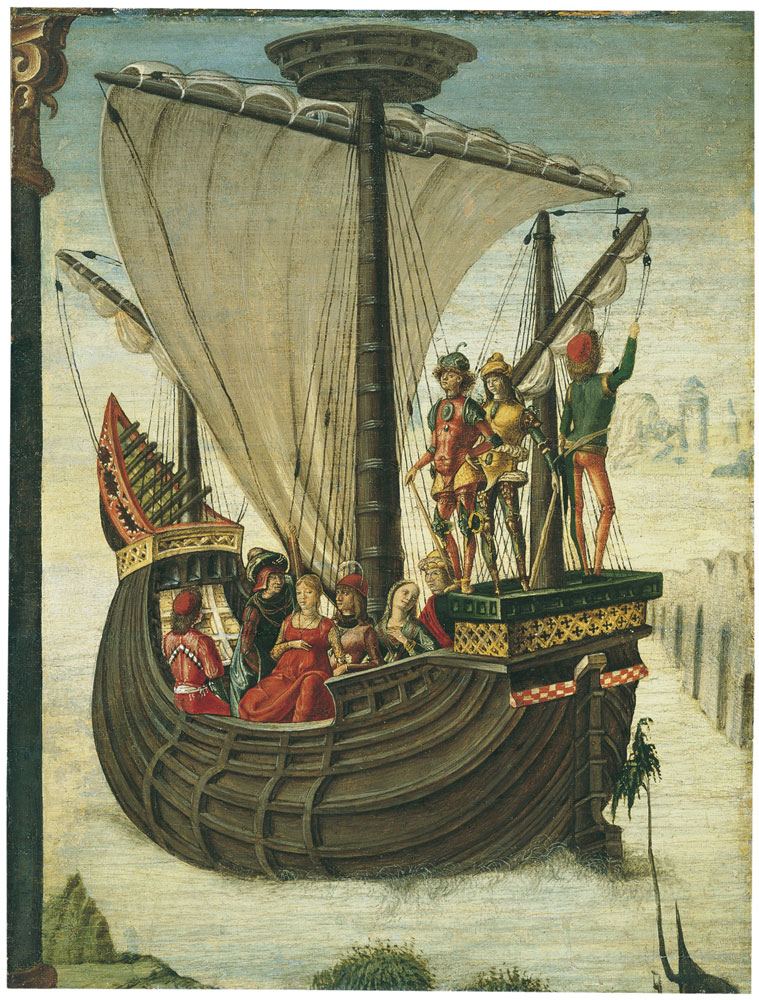
The smaller ships, probably more closely resembling a Medieval cog than their larger companions, could ship supplies far out to sea allowing their man-of-war to focus on the important duties to hand.
The word victualler and victualling thus entered the parlance of the Royal Navy and in turn her American daughter. The same could not be said of the Latin-speaking navies, who relied more on a form of the word "provider"; le fournisseur in French, for instance.
Thus we find in the English speaking countries the victualling bill which was essentially the receipt kept at a customs house for provisions and stores provided to the quartermaster of a merchant ship after payment or bond had been received. The victualling book would have been kept aboard ship, generally by the purser, and would have been a log of incoming and outgoing provisions. This would have been inspected on a regular basis by the captain and/or owner to ensure that all was on the up-and-up, so to say.
In the navy, the victualling yards were a series of warehouses where provisions and other dry goods were stored for the stocking of naval vessels. These yards were generally located near naval dockyard such as Boston, New York, Baltimore, Charleston and New Orleans in early 19th century America, and Plymouth, Gosport, Gibraltar and Jamaica for the Royal Navy (to name only a few.)
And now that we have our victuals in, I'm away to sea Brethren. Fair winds for this Saturday and beyond; huzzah!
Header: The Argonauts Leaving Colchis by Ercole de Roberti c 1480 via Old Paint; a fanciful interpretation of a round ship, or cog
Showing posts with label Mary Rose. Show all posts
Saturday, February 23, 2013
Thursday, February 7, 2013
History: The Portsmouth Chain
Protecting important harbors has been an ongoing nautical pursuit for centuries. Often it meant deploying ships and men that could be better utilized elsewhere. But England, being an island nation, was one of the first modern countries to use a more efficient and ingenious strategy.
Known as the Portsmouth harbor chain, the length of enormous metal links was stretched across the "haven" or mouth of Portsmouth harbor during the reign of Henry VIII some time in 1518 or 1519. King Hal had established the English Navy a few years prior and had declared Portsmouth, with its deep water, wide entry and dry dock built by his father, the navy's home port. The problem was that England's enemies, and France in particular, knew the strategic importance of Portsmouth harbor and had staged raids upon it throughout the Medieval and early Renaissance period.
As this article at The Portsmouth News online indicates, Bishop Fox of Winchester had written to Henry's Lord Chancellor Wolsey that "if war were intended against England, the Isle of Wight and Portsmouth are too feeble for defense" in 1518.
Bishop Fox's assessment was, of course, backed by historical data. The French sacked the town repeatedly in 1338, 1369, 1377 and 1380 with the Black Death devastating Portsmouth in between just for good measure. Henry V, whose decisive victory over the French at Agincourt put a stop to that nonsense - at least for a while - was the first English king to fortify Portsmouth harbor with wooden towers. Henry VII rebuilt these in stone and it was from these towers that the chain was strung.
The enormous metal links were obviously too huge to raise and lower by hand, so capstans were built to do the job. The chain was lowered into the water to allow ships to pass over it and raised to block entry.
Despite the placement of the chain, the French continued their attempts to sack Portsmouth. In July of 1545, one of those attempts resulted in the loss of Henry VIII's beloved galleon of war Mary Rose. The king witnessed the sinking of the ship and the loss of her 500 sailors from Southsea Castle, which he built at Portsmouth with money from all those monasteries he ransacked.
Today, as The Portsmouth News piece points out, only a fraction of the great Portsmouth harbor chain has been recovered. The search goes on, however, for the rest of this particularly English bit of nautical history. As the writer notes: "it must be somewhere."
Header: Two links of the Portsmouth harbor chain c 2011 via Wikipedia (click over to TPN article to see a picture that really shows how very large the links are)
Known as the Portsmouth harbor chain, the length of enormous metal links was stretched across the "haven" or mouth of Portsmouth harbor during the reign of Henry VIII some time in 1518 or 1519. King Hal had established the English Navy a few years prior and had declared Portsmouth, with its deep water, wide entry and dry dock built by his father, the navy's home port. The problem was that England's enemies, and France in particular, knew the strategic importance of Portsmouth harbor and had staged raids upon it throughout the Medieval and early Renaissance period.
As this article at The Portsmouth News online indicates, Bishop Fox of Winchester had written to Henry's Lord Chancellor Wolsey that "if war were intended against England, the Isle of Wight and Portsmouth are too feeble for defense" in 1518.
Bishop Fox's assessment was, of course, backed by historical data. The French sacked the town repeatedly in 1338, 1369, 1377 and 1380 with the Black Death devastating Portsmouth in between just for good measure. Henry V, whose decisive victory over the French at Agincourt put a stop to that nonsense - at least for a while - was the first English king to fortify Portsmouth harbor with wooden towers. Henry VII rebuilt these in stone and it was from these towers that the chain was strung.
The enormous metal links were obviously too huge to raise and lower by hand, so capstans were built to do the job. The chain was lowered into the water to allow ships to pass over it and raised to block entry.
Despite the placement of the chain, the French continued their attempts to sack Portsmouth. In July of 1545, one of those attempts resulted in the loss of Henry VIII's beloved galleon of war Mary Rose. The king witnessed the sinking of the ship and the loss of her 500 sailors from Southsea Castle, which he built at Portsmouth with money from all those monasteries he ransacked.
Today, as The Portsmouth News piece points out, only a fraction of the great Portsmouth harbor chain has been recovered. The search goes on, however, for the rest of this particularly English bit of nautical history. As the writer notes: "it must be somewhere."
Header: Two links of the Portsmouth harbor chain c 2011 via Wikipedia (click over to TPN article to see a picture that really shows how very large the links are)
Friday, October 5, 2012
Booty: Mary Rose Brought to Life
Over at the Mary Rose Facebook page, it's photo Friday. They pulled the gorgeous photo of bobbins, thimbles, needles and collars out for today's brief history lesson. Here's the caption:
For the crew of the Mary Rose, just as it is for modern military personnel, it was vitally important that you were able to make your own repairs to your kit, should they become damaged.
Four bobbins, made of ash, willow, alder and Scots pine, were recovered, and at least one may have been decorated with paint. All have three collars, one at either end, plus one positioned centrally, and are hollow with one solid end. Three were found with the original stopper, which prevented the contents (pins and needles, as was found in one example) from spilling out. Although none was found, thread would have been wound around the outside of the tube between the collars.
With the exception of one silver one, all the needles recovered were made of copper alloy, and all show signs of frequent usage. Four of them even show signs of resharpening!
The thirteen thimbles [ed. note: a great name for a band!] were probably originally made in Nuremburg, three domed topped, the rest righ-type, which left the tip of the thumb exposed. As these were used for heavy duty work, such as the sewing of canvas, there is no surprise that these were the most common!
Finally, at the top of the picture we have two chalk reels, used by the carpenters to mark a straight line. Nothing to do with sewing, but hey were in the picture anyway.
If you're puzzling over why thumbs would be left exposed to potentially painful impalement by a copper alloy needle, keep in mind that work with canvas would have been undertaken utilizing a sailmaker's palm. These would have been made, for the most part, of leather and would therefore not have survived to be included among the fascinating relics of Henry VIII's doomed Mary Rose.
Find more fascinating information about the great ship on Facebook and follow the continuing research on their Twitter stream.
Update: The generous folks at The Mary Rose Museum have given me a heads up that the above items are currently off display but will return when the new museum opens next year. Thank you all; we can't wait.
For the crew of the Mary Rose, just as it is for modern military personnel, it was vitally important that you were able to make your own repairs to your kit, should they become damaged.
Four bobbins, made of ash, willow, alder and Scots pine, were recovered, and at least one may have been decorated with paint. All have three collars, one at either end, plus one positioned centrally, and are hollow with one solid end. Three were found with the original stopper, which prevented the contents (pins and needles, as was found in one example) from spilling out. Although none was found, thread would have been wound around the outside of the tube between the collars.
With the exception of one silver one, all the needles recovered were made of copper alloy, and all show signs of frequent usage. Four of them even show signs of resharpening!
The thirteen thimbles [ed. note: a great name for a band!] were probably originally made in Nuremburg, three domed topped, the rest righ-type, which left the tip of the thumb exposed. As these were used for heavy duty work, such as the sewing of canvas, there is no surprise that these were the most common!
Finally, at the top of the picture we have two chalk reels, used by the carpenters to mark a straight line. Nothing to do with sewing, but hey were in the picture anyway.
If you're puzzling over why thumbs would be left exposed to potentially painful impalement by a copper alloy needle, keep in mind that work with canvas would have been undertaken utilizing a sailmaker's palm. These would have been made, for the most part, of leather and would therefore not have survived to be included among the fascinating relics of Henry VIII's doomed Mary Rose.
Find more fascinating information about the great ship on Facebook and follow the continuing research on their Twitter stream.
Update: The generous folks at The Mary Rose Museum have given me a heads up that the above items are currently off display but will return when the new museum opens next year. Thank you all; we can't wait.
Thursday, June 28, 2012
History: Medicine Chest
Our mate and supporter of Triple P David brought an article over at Daily Mail UK to my attention on Tuesday. While I'm not a huge fan of Daily Mail - really, how many of us care what Pippa Middleton is wearing? - this piece was one of their rare gems about a true historic find.
According to the article, a magnificent "surgeon's chest" dates from 1817 and was found recently in a house in Derbyshire, England. Virtually untouched except for a few dosings, most of the bottles and jars retain their contents and the chest, made of mahogany, is complete with its original instruction booklet.
The piece in its entirety will be auctioned in Derby this coming Saturday and speculations as to its original use are given by auctioneer Charles Hanson:
It may have been used out of hours by a doctor on call, or owned by the family of a large country house to carry with them on a long journey by horse or carriage.
Or, if I may, by sea. This sort of chest was exactly the type that well-provisioned naval surgeons would have had aboard ship in most of the navies of Europe and certainly the U.S. Navy by the Napoleonic Wars. This tradition of bringing boxes of medicines - and of course implements - aboard along with a surgeon/barber probably originated with Henry VIII's English Navy. As noted here at Triple P before, Henry's great warship Mary Rose had a similar surgeon's box aboard her.
This type of medicine chest would also have been coveted highly by pirates and privateers. Though a legitimate privateer might ship a surgeon (for instance, many of the larger U.S. privateers during the War of 1812 did), pirates almost unanimously never did. Finding a surgeon's chest such as this aboard a prize would have been a boon to every man in the crew. The contents would, for the most part, have been familiar to the sailors. Although their knowledge of doses and weights may not have been up to snuff, they would have had a general idea of what to do with the contents of the chest.
As to what is in this individual specimen, the spectrum of medicines seems to cover most ailments. Manna, noted by Mrs. Child in The Family Nurse as a "mild, agreeable laxative that may be safely administered to children and the aged" is included. Also available is peppermint water which would have been used not only for nausea and vomiting but also, again to quote Mrs. Child, "to cover the taste of disagreeable medicines, and diminish their griping effects." A bottle of Cream of tartar might have been used as a laxative; Mrs. Child also recommends it mixed with lemon in a tisane to fevers.
Of course the most popular medicine of the era, laudanum, is not forgotten. A tincture of opium in alcohol, laudanum was the go-to medication for everything from hysteria to anesthesia. Yes, old Doc Sawbones knew enough to give a sailor a heavy dose of opium before he cut off that gangrenous limb. If he had any available, that is. He might also get into the stuff himself, forming a disagreeable habit that could ruin him. This was certainly the case with Patrick O'Brian's fictional Doctor Stephen Maturin who managed to free himself from addiction through sheer force of will.
The surgeon's chest found in Derby is a rare and important find that could give historians new insights into how our ancestors treated disease. Let us hope, as the article notes, that it is purchased by someone who can not only appreciate it, but share it as the "time capsule" that it really is.
Header: Surgeon's chest via Daily Mail UK
According to the article, a magnificent "surgeon's chest" dates from 1817 and was found recently in a house in Derbyshire, England. Virtually untouched except for a few dosings, most of the bottles and jars retain their contents and the chest, made of mahogany, is complete with its original instruction booklet.
The piece in its entirety will be auctioned in Derby this coming Saturday and speculations as to its original use are given by auctioneer Charles Hanson:
It may have been used out of hours by a doctor on call, or owned by the family of a large country house to carry with them on a long journey by horse or carriage.
Or, if I may, by sea. This sort of chest was exactly the type that well-provisioned naval surgeons would have had aboard ship in most of the navies of Europe and certainly the U.S. Navy by the Napoleonic Wars. This tradition of bringing boxes of medicines - and of course implements - aboard along with a surgeon/barber probably originated with Henry VIII's English Navy. As noted here at Triple P before, Henry's great warship Mary Rose had a similar surgeon's box aboard her.
This type of medicine chest would also have been coveted highly by pirates and privateers. Though a legitimate privateer might ship a surgeon (for instance, many of the larger U.S. privateers during the War of 1812 did), pirates almost unanimously never did. Finding a surgeon's chest such as this aboard a prize would have been a boon to every man in the crew. The contents would, for the most part, have been familiar to the sailors. Although their knowledge of doses and weights may not have been up to snuff, they would have had a general idea of what to do with the contents of the chest.
As to what is in this individual specimen, the spectrum of medicines seems to cover most ailments. Manna, noted by Mrs. Child in The Family Nurse as a "mild, agreeable laxative that may be safely administered to children and the aged" is included. Also available is peppermint water which would have been used not only for nausea and vomiting but also, again to quote Mrs. Child, "to cover the taste of disagreeable medicines, and diminish their griping effects." A bottle of Cream of tartar might have been used as a laxative; Mrs. Child also recommends it mixed with lemon in a tisane to fevers.
Of course the most popular medicine of the era, laudanum, is not forgotten. A tincture of opium in alcohol, laudanum was the go-to medication for everything from hysteria to anesthesia. Yes, old Doc Sawbones knew enough to give a sailor a heavy dose of opium before he cut off that gangrenous limb. If he had any available, that is. He might also get into the stuff himself, forming a disagreeable habit that could ruin him. This was certainly the case with Patrick O'Brian's fictional Doctor Stephen Maturin who managed to free himself from addiction through sheer force of will.
The surgeon's chest found in Derby is a rare and important find that could give historians new insights into how our ancestors treated disease. Let us hope, as the article notes, that it is purchased by someone who can not only appreciate it, but share it as the "time capsule" that it really is.
Header: Surgeon's chest via Daily Mail UK
Tuesday, May 22, 2012
Ships: Henry VIII's Man-of-War
As has been pointed out by scholars for some time, warfare begets technology. Either we’re inventing more efficient agents of death or we’re improving our knowledge of medicine and surgery. Sometimes, as with the Crimean and American Civil Wars, we’re doing both. Today’s ship is an example of the kind of technological leap forward that quite literally changes everything and its like would not be seen again until the rise of the ironclads. We’re talking about Henry VIII of England’s Mary Rose, a formidable ship that was named after the king's little sister.
Prior to the launch of the original Mary Rose in 1511, warships were of the cog or carrack. They featured high fore and aft castles that served as protection for first archers and later gunners who pelted enemy crews prior to large scale boardings. The idea of using cannons against another ship for anything but the killing and maiming of men did not occur and was, in fact, virtually impossible due to the lack of gun ports. Because cannon were heavy, they needed to be set low in a ship to ensure stability in the water; without water tight gun ports, such armament was not feasible.
This all changed when just such a technological breakthrough was achieved in the early 16th century. The Mary Rose was a virtual prototype for this new way of carrying and using great guns. The cannon could now be used not only against rigging and men, but also for battering and sinking ships.
Initially, Mary Rose was the flagship of Lord Admiral Edward Howard’s fleet of 20 ships which, along with a compliment of Spanish allies, blockaded the French coast from Calais to Brest. The Admiral was killed in an engagement in April of 1511 but his brother Thomas quickly took up command. Mary Rose and her sister ships were instrumental in landing English troops at Calais, but Henry VIII’s burning hatred of the French king Francois I saw the ship called back to Plymouth for a rebuild that would improve her fire and man power. Her 105 foot hull would be strengthened and, when she was again launched in 1536, she would carry 91 guns; 13 more than in her previous incarnation.
As John Batchelor and Christopher Chant point out in The Complete Encyclopedia of Sailing Ships, Mary Rose’s compliment of not only arms but men speaks a lot to the sea change in naval warfare that her new design was heading up. When first launched, she carried 200 sailors, 185 soldiers and 30 gunners. By comparison, the compliment of her contemporary, Sovereign, numbered 400 soldiers to only 300 sailors and not a gunner in sight. When she was relaunched in 1536, she probably carried somewhere in the neighborhood of 400 men, with the numbers skewed toward sailing and gunnery once again.
When England’s war with France hit a fever pitch in 1545, Mary Rose was in the thick of it. Francois I planned to invade Portsmouth with a superior fleet of over 200 ships to Henry’s 60. On July 19th, the two sides engaged with the French targeting the larger Henry Grace a Dieu. A change in the wind allowed the English fleet to advance on the French and it looked as if Mary Rose might lead the charge to beat the French ships back. Historians are still debating what actually happened but the general theory is that Mary Rose’s inexperienced crew threw open her gun ports too soon, she heeled to starboard and her lower decks flooded almost instantly. She foundered and sank with the loss of all but 35 souls. One of the most interesting creatures to go down with her ship was Hatch, Mary Rose’s dog and rat catcher.
An attempt to salvage the ship was made once the French fleet had been chased back to Le Havre, but only a few cannons were raised. It wasn’t until 1982 that a large portion of the ship along with innumerable fascinating artifacts and Hatch’s intact skeleton were raised from the deep. A permanent home for the ship and museum dedicated to her and her seafaring era are still in the works. Find out more at the Mary Rose 500 Facebook page here.
Mary Rose, though she may not seem so now to modern eyes, was a technological marvel whose design would change the way all European nations approached warfare at sea. And that is undeniably impressive.
Header: Mary Rose by Bill Bishop via The Mary Rose Project
Prior to the launch of the original Mary Rose in 1511, warships were of the cog or carrack. They featured high fore and aft castles that served as protection for first archers and later gunners who pelted enemy crews prior to large scale boardings. The idea of using cannons against another ship for anything but the killing and maiming of men did not occur and was, in fact, virtually impossible due to the lack of gun ports. Because cannon were heavy, they needed to be set low in a ship to ensure stability in the water; without water tight gun ports, such armament was not feasible.
This all changed when just such a technological breakthrough was achieved in the early 16th century. The Mary Rose was a virtual prototype for this new way of carrying and using great guns. The cannon could now be used not only against rigging and men, but also for battering and sinking ships.
Initially, Mary Rose was the flagship of Lord Admiral Edward Howard’s fleet of 20 ships which, along with a compliment of Spanish allies, blockaded the French coast from Calais to Brest. The Admiral was killed in an engagement in April of 1511 but his brother Thomas quickly took up command. Mary Rose and her sister ships were instrumental in landing English troops at Calais, but Henry VIII’s burning hatred of the French king Francois I saw the ship called back to Plymouth for a rebuild that would improve her fire and man power. Her 105 foot hull would be strengthened and, when she was again launched in 1536, she would carry 91 guns; 13 more than in her previous incarnation.
As John Batchelor and Christopher Chant point out in The Complete Encyclopedia of Sailing Ships, Mary Rose’s compliment of not only arms but men speaks a lot to the sea change in naval warfare that her new design was heading up. When first launched, she carried 200 sailors, 185 soldiers and 30 gunners. By comparison, the compliment of her contemporary, Sovereign, numbered 400 soldiers to only 300 sailors and not a gunner in sight. When she was relaunched in 1536, she probably carried somewhere in the neighborhood of 400 men, with the numbers skewed toward sailing and gunnery once again.
When England’s war with France hit a fever pitch in 1545, Mary Rose was in the thick of it. Francois I planned to invade Portsmouth with a superior fleet of over 200 ships to Henry’s 60. On July 19th, the two sides engaged with the French targeting the larger Henry Grace a Dieu. A change in the wind allowed the English fleet to advance on the French and it looked as if Mary Rose might lead the charge to beat the French ships back. Historians are still debating what actually happened but the general theory is that Mary Rose’s inexperienced crew threw open her gun ports too soon, she heeled to starboard and her lower decks flooded almost instantly. She foundered and sank with the loss of all but 35 souls. One of the most interesting creatures to go down with her ship was Hatch, Mary Rose’s dog and rat catcher.
An attempt to salvage the ship was made once the French fleet had been chased back to Le Havre, but only a few cannons were raised. It wasn’t until 1982 that a large portion of the ship along with innumerable fascinating artifacts and Hatch’s intact skeleton were raised from the deep. A permanent home for the ship and museum dedicated to her and her seafaring era are still in the works. Find out more at the Mary Rose 500 Facebook page here.
Mary Rose, though she may not seem so now to modern eyes, was a technological marvel whose design would change the way all European nations approached warfare at sea. And that is undeniably impressive.
Header: Mary Rose by Bill Bishop via The Mary Rose Project
Thursday, March 8, 2012
History: A Surgeon Aboard Us
I thank the Lord Serapis that when I was in danger at sea he straightway saved me through the good grace and constancy of our doctor… ~ letter from Roman sailor Apion to his parents, Epimacus and Philadelphia circa 100 CE.
As the above snippet from a short letter home shows, doctors have been sailing aboard ships of all kinds for centuries. Because it was not until the Napoleonic Wars that shipboard doctors were routinely recognized as part of the standing crew, many historians have glossed over or completely ignored the history that led up to that acceptance. Fortunately, some modern writers have endeavored to set the record straight.
As noted by Kevin Brown in his entertaining history of seafaring medicine Poxed & Scurvied, it may have been the Greek poet Homer who first wrote of naval surgeons in his epic Iliad. Here he mentions Machaon and Polidalirus, the medical professionals who sailed with Agamemnon’s fleet when that king set out to start the Trojan War.
As Brown notes, it was during the Imperial days of Rome that doctors aboard ship began to really become a fixture. So much so, in fact, that Caesar Augustus included them in his regulations against doctors going into battle. There were also regulations during his reign that navy physicians be over the age of 21.
In the Medieval period, a barber who could double as a surgeon – essentially, let’s face it, a puller of teeth, stitcher of wounds and hacker-off of limbs – was regularly aboard the merchant vessels of the Cinque Ports and Hanseatic leagues. It may be that at least some of the surgeons who accompanied Christopher Columbus on his post-1492 cruises to the New World were also spies for Spain. In Empires of the Atlantic World J.H. Elliott notes that Ferdinand and particularly Isabella sought to control the unruly mariner by inserting their own intelligencer on his ship in the person of royal doctor Diego Alvares Chanca y Salazar.
True finesse in medicine at sea had already bloomed in the Mediterranean with the era of the Crusades. Here the Knight of Malta and their counterparts, the Knights Hospitaller, began fitting out ships as floating hospitals to treat sick and battle wounded in the 15th century. Though the ships were merchant vessels repurposed as sick berths, they were a decided innovation that probably saved more than a few lives.
It should be noted that the Knights of St. John, an arm first of the Hospitallers and then the Maltese, extended treatment for injury or illness to their Moslem galley slaves. Brown notes that these men were treated, along with Christian sailors, at the Sacra Infermeria in Valletta. Here, such attentions as food service on silver plates and large, breezy wards were denied to no one regardless of societal status, religion or country of origin.
A tremendous amount of information regarding medicine at sea has come from the excavation of Henry VIII’s favorite warship Mary Rose. Launched in 1511 and sunk in 1545, she appears to have gone down with her entire crew (including the intrepid ratter known as Hatch) and all goods aboard. Since 1982, the Mary Rose Project has been revealing her history and what they have found tells us a good bit about the surgeon aboard.
He seems to have occupied two cabins, one perhaps for his own use and the other for any assistants he may have had and/or examinations and surgery. He seems to have been doing a good job too for, as Brown notes, most of the crew of over 400 men “… were large-boned, strong, and fit …”
Brown also gives us a somewhat chilling list of the instruments found in Mary Rose’s surgeon’s kit:
… copper alloy mortars, spoons, bandage rolls, pewter syringes for urethral irrigations in the treatment of gonorrhea and for the irrigation of wounds, wooden needles, spatulas, a maplewood feeding vessel, a leather wallet for storing instruments, ear scoops for cleaning out the ear, razors, a brass shaving bowl, and the handles of surgical instruments.
As Brown points out, the metal portions of those instruments have rusted away but they certainly included saws, forceps, probes, cautery irons and a trepan for removing parts of shattered skulls. The brutality of such necessary treatment is easily imagined, and thankfully avoided in this day and age.
Of course things were none too pleasant on the Spanish Main of a short 100 years later. Stephan Talty in Empire of Blue Water tells us that Henry Morgan shipped a surgeon on his raids of both Portobello and Panama City. Little good they seem to have done, however, as they turned up drunk and incapable on more then one occasion. Slap dash amputations by carpenters and careless cauterizations with swords led to gangrene and death, more often than not, in the humid heat of the jungle. Only the very strongest could survive the treatment, much less the injury.
As medicine improved so did its availability at sea. The surgeon became the physician, falling eventually into the general group known as warrant officers. And long before Nelson’s navy, the scientist-physician epitomized by real men like James Lind and fictional characters like Stephen Maturin was already starting to take to the sea. Morgan himself, as an aging pirate made good with gout and cirrhosis, was treated by Dr. Hans Sloane. Sloane was the epitome of the physician cum naturalist in 1687 and, though he could not save the decrepit Morgan from himself, he would go on to treat English royalty.
The history of medicine at sea continues to fascinate on so many levels. To each their own, of course, but I always wonder how one would manage to remove a cataract aboard a sailing ship at sea around 1810. The thought that it could be – and was – done is just another example of how hardy and capable our ancestors really were.
Header: Mary Rose by Bill Bishop via The Mary Rose Project
As the above snippet from a short letter home shows, doctors have been sailing aboard ships of all kinds for centuries. Because it was not until the Napoleonic Wars that shipboard doctors were routinely recognized as part of the standing crew, many historians have glossed over or completely ignored the history that led up to that acceptance. Fortunately, some modern writers have endeavored to set the record straight.
As noted by Kevin Brown in his entertaining history of seafaring medicine Poxed & Scurvied, it may have been the Greek poet Homer who first wrote of naval surgeons in his epic Iliad. Here he mentions Machaon and Polidalirus, the medical professionals who sailed with Agamemnon’s fleet when that king set out to start the Trojan War.
As Brown notes, it was during the Imperial days of Rome that doctors aboard ship began to really become a fixture. So much so, in fact, that Caesar Augustus included them in his regulations against doctors going into battle. There were also regulations during his reign that navy physicians be over the age of 21.
In the Medieval period, a barber who could double as a surgeon – essentially, let’s face it, a puller of teeth, stitcher of wounds and hacker-off of limbs – was regularly aboard the merchant vessels of the Cinque Ports and Hanseatic leagues. It may be that at least some of the surgeons who accompanied Christopher Columbus on his post-1492 cruises to the New World were also spies for Spain. In Empires of the Atlantic World J.H. Elliott notes that Ferdinand and particularly Isabella sought to control the unruly mariner by inserting their own intelligencer on his ship in the person of royal doctor Diego Alvares Chanca y Salazar.
True finesse in medicine at sea had already bloomed in the Mediterranean with the era of the Crusades. Here the Knight of Malta and their counterparts, the Knights Hospitaller, began fitting out ships as floating hospitals to treat sick and battle wounded in the 15th century. Though the ships were merchant vessels repurposed as sick berths, they were a decided innovation that probably saved more than a few lives.
It should be noted that the Knights of St. John, an arm first of the Hospitallers and then the Maltese, extended treatment for injury or illness to their Moslem galley slaves. Brown notes that these men were treated, along with Christian sailors, at the Sacra Infermeria in Valletta. Here, such attentions as food service on silver plates and large, breezy wards were denied to no one regardless of societal status, religion or country of origin.
A tremendous amount of information regarding medicine at sea has come from the excavation of Henry VIII’s favorite warship Mary Rose. Launched in 1511 and sunk in 1545, she appears to have gone down with her entire crew (including the intrepid ratter known as Hatch) and all goods aboard. Since 1982, the Mary Rose Project has been revealing her history and what they have found tells us a good bit about the surgeon aboard.
He seems to have occupied two cabins, one perhaps for his own use and the other for any assistants he may have had and/or examinations and surgery. He seems to have been doing a good job too for, as Brown notes, most of the crew of over 400 men “… were large-boned, strong, and fit …”
Brown also gives us a somewhat chilling list of the instruments found in Mary Rose’s surgeon’s kit:
… copper alloy mortars, spoons, bandage rolls, pewter syringes for urethral irrigations in the treatment of gonorrhea and for the irrigation of wounds, wooden needles, spatulas, a maplewood feeding vessel, a leather wallet for storing instruments, ear scoops for cleaning out the ear, razors, a brass shaving bowl, and the handles of surgical instruments.
As Brown points out, the metal portions of those instruments have rusted away but they certainly included saws, forceps, probes, cautery irons and a trepan for removing parts of shattered skulls. The brutality of such necessary treatment is easily imagined, and thankfully avoided in this day and age.
Of course things were none too pleasant on the Spanish Main of a short 100 years later. Stephan Talty in Empire of Blue Water tells us that Henry Morgan shipped a surgeon on his raids of both Portobello and Panama City. Little good they seem to have done, however, as they turned up drunk and incapable on more then one occasion. Slap dash amputations by carpenters and careless cauterizations with swords led to gangrene and death, more often than not, in the humid heat of the jungle. Only the very strongest could survive the treatment, much less the injury.
As medicine improved so did its availability at sea. The surgeon became the physician, falling eventually into the general group known as warrant officers. And long before Nelson’s navy, the scientist-physician epitomized by real men like James Lind and fictional characters like Stephen Maturin was already starting to take to the sea. Morgan himself, as an aging pirate made good with gout and cirrhosis, was treated by Dr. Hans Sloane. Sloane was the epitome of the physician cum naturalist in 1687 and, though he could not save the decrepit Morgan from himself, he would go on to treat English royalty.
The history of medicine at sea continues to fascinate on so many levels. To each their own, of course, but I always wonder how one would manage to remove a cataract aboard a sailing ship at sea around 1810. The thought that it could be – and was – done is just another example of how hardy and capable our ancestors really were.
Header: Mary Rose by Bill Bishop via The Mary Rose Project
Tuesday, July 26, 2011
Ships: The Weight of Wood
I'm fascinated by how much ships weigh. It seems counter-intuitive to imagine a two million ton hunk of metal – like the Queen Mary 2 – floating blissfully on wave. At least to me. When I saw a chart of historical ships’ tonnage in Peter H. Spectre’s A Mariner’s Miscellany I thought I’d share just some of the weights in wood that have kept afloat, and moved men and history, over the centuries. I’ve added a few of my own favorites as well.
Khufu’s famous monoreme, which now hangs in the Cairo Museum, displaced 94 tons.
Medieval Cinque Ports ships that ran between Dover, Hastings, Hythe, Romney and Sandwich weighed, on average, 80 tons.
Columbus’ Santa Maria was only about 100 tons.
By comparison, Henry VIII’s Henri Grace a Dieu known as Great Harry, weighed in at a whopping 1,200 tons where as Mary Rose was 600 tons and Drake’s Golden Hinde was a mere 120.
Throughout the 17th century, ships grew in size. Mayflower (1620) was 180 tons. Vasa (1628) carried 1,300 tons, making her one of the largest ships of her era. In 1637, Sovereign of the Seas weighed in at 1,522 tons and by 1765 HMS Victory was over 2.000 tons.
Of course, smaller ships continued to have their uses. The pirates of the 18th century favored shallow draft brigs and sloops, usually no more than 120 tons. The privateers of the following century preferred the same types of ships, but usually even lighter and faster at between 90 and 100 tons. Renato Beluche’s Spy, for instance, was just 95 tons.
Over in the U.S., heavy warships began appearing at the end of the 18th century. USS Constitution, built in 1797, was 2,200. By 1890, ironclads were the norm; USS Maine weighed in at an almost unfathomable 6,650 tons.
These days massive tankers of 500,000 tons or more are pretty much the norm. And then of course there are those cruise ships and mentioned above. It’s hard to wrap your head around, and sometimes disconcerting to be aboard. I’ll take a good little sloop like Spy over a QM2 any day, thankee.
Header: Ship at Sea by Luis Graner y Arrufi
Khufu’s famous monoreme, which now hangs in the Cairo Museum, displaced 94 tons.
Medieval Cinque Ports ships that ran between Dover, Hastings, Hythe, Romney and Sandwich weighed, on average, 80 tons.
Columbus’ Santa Maria was only about 100 tons.
By comparison, Henry VIII’s Henri Grace a Dieu known as Great Harry, weighed in at a whopping 1,200 tons where as Mary Rose was 600 tons and Drake’s Golden Hinde was a mere 120.
Throughout the 17th century, ships grew in size. Mayflower (1620) was 180 tons. Vasa (1628) carried 1,300 tons, making her one of the largest ships of her era. In 1637, Sovereign of the Seas weighed in at 1,522 tons and by 1765 HMS Victory was over 2.000 tons.
Of course, smaller ships continued to have their uses. The pirates of the 18th century favored shallow draft brigs and sloops, usually no more than 120 tons. The privateers of the following century preferred the same types of ships, but usually even lighter and faster at between 90 and 100 tons. Renato Beluche’s Spy, for instance, was just 95 tons.
Over in the U.S., heavy warships began appearing at the end of the 18th century. USS Constitution, built in 1797, was 2,200. By 1890, ironclads were the norm; USS Maine weighed in at an almost unfathomable 6,650 tons.
These days massive tankers of 500,000 tons or more are pretty much the norm. And then of course there are those cruise ships and mentioned above. It’s hard to wrap your head around, and sometimes disconcerting to be aboard. I’ll take a good little sloop like Spy over a QM2 any day, thankee.
Header: Ship at Sea by Luis Graner y Arrufi
Thursday, June 23, 2011
History: Tudor Pirates
In the popular imagination, the word pirate brings up the image of a flamboyantly dressed if scruffy brigand from the first half of the 18th century. He is generally garbed in the familiar heavy, long coat with a tremendous array of buttons and piping, breeches, stockings, boots and bandoliers stuffed with loaded pistols. Of course, he’s the requisite sword with its glimmering hilt and the tricorn hat sporting blood red ostrich feathers that shiver in the wind.
There can be no doubt that certain rovers dressed similarly while ashore – usually in purloined wardrobes – but these flashy fashions were meant to send a message: the wearer was a powerful man. And that message coming from motley sailors made rich by illegal exploits did not originate with men like Blackbeard and Bellamy. In fact it seems to have originated with a very different kind of pirate: the gentleman rovers of Elizabethan England.
There has always been piracy on the high seas but certain conditions at various times in history make freebooting more attractive than it might be otherwise. In Britain in the 1560s, the weather and the economy changed to such a degree that many people – men and women – who would not have considered piracy turned to it as a way to keep food on the table. Most of the problems were driven by climate change. Longer, colder winters meant crop failures and by the mid-1560s many of the relied upon salt water fish runs stopped all together. Devastated, people in coastal communities looked to the lumbering hulks and carracks that sailed past them full of saleable goods. They packed their little boats with what arms they had available, and went out sea raiding.
By the 1570s, a class of men had established themselves as successful pirate captains. They walked the streets in velvet doublets and satin breeches with gold inlay and jewels on their sword hilts and hats sporting ostrich feathers. They loaned money (at notoriously ruinous rates) and sold their spoils openly in town, laying them out on the docks for all to see.
Many of these captains were backed and funded by local nobility, who of course wanted a piece of the action. Nobles like John Piers, a sea captain whose mother was not only Lady Padstow but also a witch much feared in her shire, Lord John and Lady Mary Killigrew and even the Vice-Admiral of Devon who had dabbled in piracy himself and was the father of Sir Walter Raleigh. Given the donorship available, is it any wonder that the pirates were notorious for swaggering around Poole, the most popular piratical port, like gentlemen themselves?
Possibly the two most notorious of this rogues’ gallery were Captains Clynton and Purser. The former was probably originally a merchant captain named Atkins or Atkinson who had grown his business through cunning and cruelty to the point where he had literally no fear of the law. William Neville, in Sea Dogs: Privateers, Plunder and Piracy in the Elizabethan Age, notes that Clynton had no qualms about challenging the courts. Despite the fact that he was a wanted man, Clynton sued a ship owner who he claimed owed him over 100 pounds. He took his complaint all the way to the Admiralty Court in London. Though he was arrested there, a few well placed bribes saw him free and back at Poole within a week.
His partner in crime Captain Purser, who may have been one William Walton, was just as infamous as Clynton. A story circulated at the time that the two had been approached by an emissary of the Queen to discontinue their predations in exchange for a full pardon. The men pondered the offer, and then sent the emissary back with a firm no thank you. They appreciated “… so great a grace and mercy” but would rather “… hazard their fortunes…” at sea.
There is no documentation of further action against them. None, that is, until they crossed paths with a particularly determined merchant named Agnes Cowtie, wife of George Blak. The horrific circumstances that led to Goodwife Cowtie’s just revenge are best left for Horror on the High Seas Week. Until then, we will imagine Clynton and Purser in port, arrayed in their finest and blissfully unaware of their inevitable fate.
Header: The carrack Mary Rose from a contemporary manuscript
There can be no doubt that certain rovers dressed similarly while ashore – usually in purloined wardrobes – but these flashy fashions were meant to send a message: the wearer was a powerful man. And that message coming from motley sailors made rich by illegal exploits did not originate with men like Blackbeard and Bellamy. In fact it seems to have originated with a very different kind of pirate: the gentleman rovers of Elizabethan England.
There has always been piracy on the high seas but certain conditions at various times in history make freebooting more attractive than it might be otherwise. In Britain in the 1560s, the weather and the economy changed to such a degree that many people – men and women – who would not have considered piracy turned to it as a way to keep food on the table. Most of the problems were driven by climate change. Longer, colder winters meant crop failures and by the mid-1560s many of the relied upon salt water fish runs stopped all together. Devastated, people in coastal communities looked to the lumbering hulks and carracks that sailed past them full of saleable goods. They packed their little boats with what arms they had available, and went out sea raiding.
By the 1570s, a class of men had established themselves as successful pirate captains. They walked the streets in velvet doublets and satin breeches with gold inlay and jewels on their sword hilts and hats sporting ostrich feathers. They loaned money (at notoriously ruinous rates) and sold their spoils openly in town, laying them out on the docks for all to see.
Many of these captains were backed and funded by local nobility, who of course wanted a piece of the action. Nobles like John Piers, a sea captain whose mother was not only Lady Padstow but also a witch much feared in her shire, Lord John and Lady Mary Killigrew and even the Vice-Admiral of Devon who had dabbled in piracy himself and was the father of Sir Walter Raleigh. Given the donorship available, is it any wonder that the pirates were notorious for swaggering around Poole, the most popular piratical port, like gentlemen themselves?
Possibly the two most notorious of this rogues’ gallery were Captains Clynton and Purser. The former was probably originally a merchant captain named Atkins or Atkinson who had grown his business through cunning and cruelty to the point where he had literally no fear of the law. William Neville, in Sea Dogs: Privateers, Plunder and Piracy in the Elizabethan Age, notes that Clynton had no qualms about challenging the courts. Despite the fact that he was a wanted man, Clynton sued a ship owner who he claimed owed him over 100 pounds. He took his complaint all the way to the Admiralty Court in London. Though he was arrested there, a few well placed bribes saw him free and back at Poole within a week.
His partner in crime Captain Purser, who may have been one William Walton, was just as infamous as Clynton. A story circulated at the time that the two had been approached by an emissary of the Queen to discontinue their predations in exchange for a full pardon. The men pondered the offer, and then sent the emissary back with a firm no thank you. They appreciated “… so great a grace and mercy” but would rather “… hazard their fortunes…” at sea.
There is no documentation of further action against them. None, that is, until they crossed paths with a particularly determined merchant named Agnes Cowtie, wife of George Blak. The horrific circumstances that led to Goodwife Cowtie’s just revenge are best left for Horror on the High Seas Week. Until then, we will imagine Clynton and Purser in port, arrayed in their finest and blissfully unaware of their inevitable fate.
Header: The carrack Mary Rose from a contemporary manuscript
Wednesday, May 25, 2011
Ships: Royal Warrior
On the 10th of April, 1628, Sweden’s largest and most impressive line-of-battle ship to date was launched at Stockholm. The breeze was light, causing the crew to move the ship, named Vasa after the Swedish Royal family, out of the harbor to Slussen. Without warning the skies around mighty Vasa grew dark, a squall quickly mounted into a gale and the warship was caught with her topsails and courses out and her gun ports open for show. Vasa listed to starboard, the lower decks flooded with seawater and literally within minutes the 1,300 ton vessel sank with a loss of over 400 lives.
Vasa was built on the orders of King Gustavus Adolphus whose navy was the premier fighting force in the Baltic at the beginning of the Thirty Years’ War. With tensions escalating between Catholics and Protestants, Hapsburgs and Bourbons, Gustavus sought to protect the sovereignty of his country and her territories by increasing his naval force. Vasa, designed by Henrik Hybertson de Groot and Henrik Jacobson was built at the Royal Dockyard in Stockholm in a fairly short time. With the campaign in the Baltic heating up, Gustavus wanted a large warship to take the lead at the siege of Danzig, which his navy had begun to blockade in 1627.
De Groot and Jacobson complied with a 180 foot ship, 38 feet at the beam with a draft of a little over 15 feet. Fully mounted, she would carry sixty-four guns including two 62 pounders, three 35 pounders and forty-eight 24 pounders. Her firepower was formidable but her compliment of men was surprisingly small. Vasa carried only 145 sailing men with the remaining crew being made up of approximately 300 soldiers. She was not only fierce but beautiful, with ornate carvings fore and aft that would serve as models for European royal yachts of the 18th and 19th century.
Because she was a true gem of the shipbuilder’s art, efforts to salvage Vasa began immediately. Englishman Ian Bulmer managed to haul Vasa up on her keel, but the 115 foot depth to which she had sunk was too daunting to make raising her possible. Although some of her guns were salvaged in 1664, further attempts were set aside and Vasa sat beneath the cold waters off her home port for over 300 years.
In 1956 the wreck was “rediscovered” by amateur marine archaeologists who took a sample of the hull to the Swedish Navy. Their divers confirmed the find and immediate plans to raise Vasa were underway. Channels were dug in the mud around her, and straps were placed under her hull which were then hooked to pontoon vessels. Vasa was moved, while still submerged, to a water depth of 50 feet. Over the course of a year, patches and reinforcements were made on her hull and on April 24, 1960 she was not only raised but floated into dry dock on her own hull. This was the first major salvage of an intact vessel attempted in the modern age, and the raising of Vasa has become a blueprint for other salvage projects such as that of Mary Rose in Britain and Whydah in the U.S.
All of Vasa’s remaining elements, from loose artifacts to sails, woodwork and structure were meticulously preserved. The Vasa project has become the gold standard for nautical preservation. The ship in her entirety along with all artifacts associated with her are on display at the Vasa Museum in Stockholm. She is a living testimony to the ingenuity, craftsmanship and pride of not only our ancestors but our contemporaries, nautical and otherwise.
Header: Vasa, larboard side and stern, from the Vasa Museum, Stockholm
Vasa was built on the orders of King Gustavus Adolphus whose navy was the premier fighting force in the Baltic at the beginning of the Thirty Years’ War. With tensions escalating between Catholics and Protestants, Hapsburgs and Bourbons, Gustavus sought to protect the sovereignty of his country and her territories by increasing his naval force. Vasa, designed by Henrik Hybertson de Groot and Henrik Jacobson was built at the Royal Dockyard in Stockholm in a fairly short time. With the campaign in the Baltic heating up, Gustavus wanted a large warship to take the lead at the siege of Danzig, which his navy had begun to blockade in 1627.
De Groot and Jacobson complied with a 180 foot ship, 38 feet at the beam with a draft of a little over 15 feet. Fully mounted, she would carry sixty-four guns including two 62 pounders, three 35 pounders and forty-eight 24 pounders. Her firepower was formidable but her compliment of men was surprisingly small. Vasa carried only 145 sailing men with the remaining crew being made up of approximately 300 soldiers. She was not only fierce but beautiful, with ornate carvings fore and aft that would serve as models for European royal yachts of the 18th and 19th century.
Because she was a true gem of the shipbuilder’s art, efforts to salvage Vasa began immediately. Englishman Ian Bulmer managed to haul Vasa up on her keel, but the 115 foot depth to which she had sunk was too daunting to make raising her possible. Although some of her guns were salvaged in 1664, further attempts were set aside and Vasa sat beneath the cold waters off her home port for over 300 years.
In 1956 the wreck was “rediscovered” by amateur marine archaeologists who took a sample of the hull to the Swedish Navy. Their divers confirmed the find and immediate plans to raise Vasa were underway. Channels were dug in the mud around her, and straps were placed under her hull which were then hooked to pontoon vessels. Vasa was moved, while still submerged, to a water depth of 50 feet. Over the course of a year, patches and reinforcements were made on her hull and on April 24, 1960 she was not only raised but floated into dry dock on her own hull. This was the first major salvage of an intact vessel attempted in the modern age, and the raising of Vasa has become a blueprint for other salvage projects such as that of Mary Rose in Britain and Whydah in the U.S.
All of Vasa’s remaining elements, from loose artifacts to sails, woodwork and structure were meticulously preserved. The Vasa project has become the gold standard for nautical preservation. The ship in her entirety along with all artifacts associated with her are on display at the Vasa Museum in Stockholm. She is a living testimony to the ingenuity, craftsmanship and pride of not only our ancestors but our contemporaries, nautical and otherwise.
Header: Vasa, larboard side and stern, from the Vasa Museum, Stockholm
Monday, October 18, 2010
Ships: The Hero Of Trafalgar
HMS Victory, or the one that is docked at Portsmouth today, is the seventh ship in the British service to carry that fortuitous name. No sailor would argue with the good sense of giving a ship a moniker that identifies her as a winner right out of dry dock. That’ll bring you luck, sure.As is typical of her class, Victory was an enormous floating world that could hold a crew of over 800 men and an almost unfathomable variety of guns. When she fought the Battle of Trafalgar she carried two 68 pounders (remember, that is the size of the ball the gun could discharge), twenty-eight 42 pounders, twenty-eight 24 pounders, twenty-eight 16 pounders and sixteen 6 pounders. She displaced 2,160 tons.
Victory, a first rate line-of-battle ship (or “ship of the line”) was designed by Sir Thomas Slade and built at Chatham Dockyard. She was launched in 1765. At that time, however, she was still incomplete and she was not properly commissioned until 1778 when France declared her intention to lend her fighting strength, including ships and sailors, to the American Revolution. Victory entered her first engagement that July as the flagship for the Channel Fleet, fighting in the Battle of Ushant.
She returned to Ushant in 1780 where she earned fame by capturing a French convoy off the coast. Admiral Howe chose her as his flagship in 1782 when he led a flotilla to relieve the siege of Gibraltar. The next year saw the end of British/French aggressions and Victory returned to Portsmouth, where she sat “in ordinary” (with her spars and masts taken down and only a skeleton crew to maintain her) for eight years.
By 1793 she was back in service, this time as the flagship of Admiral Sir John Jervis at the head of the Mediterranean Fleet during the Napoleonic Wars. On February 14, 1795, Jervis intercepted a large Spanish convoy and engaged them at the Battle of Cape St. Vincent. He took two Spanish flagships and three smaller Spanish ships during the battle with the loss of only 9 British lives. The efforts of an as yet relatively unknown Captain by the name of Horatio Nelson had a great deal to do with Jervis’ resounding success.
Though Victory was put up as a prison hospital ship in 1800, she was soon missed and rebuilt. In 1803 Captain Thomas Hardy took command of her and she returned to the Mediterranean where she became the flagship of now Vice-Admiral Lord Nelson’s fleet. She cruised the Mediterranean and the Atlantic Ocean on the hunt for French Vice-Admiral Pierre Villeneuve’s fleet which had the potential to invade England. The animosity between the two brilliant Admirals came to a head off Cadiz at the Battle of Trafalgar on October 21, 1805.
The outcome of the battle was, of course, a decisive win for the British and the end of any real naval threat to England from the French. Nelson was shot by a French sniper while commanding on the deck of Victory. Taken below, he expired once he was told that 15 French and Spanish ships had been captured and that the British would surely win the day. Packed in a barrel of rum, Nelson’s body returned home aboard Victory. She achieved Sheerness on December 22nd, having lost 57 of her crew (including Nelson) with 102 wounded.
Victory, though she has never been decommissioned, almost instantly became something like a floating shrine to the great British hero that Nelson had already become. She was eventually docked at Portsmouth, where she sits today as part of the Portsmouth Maritime Museum which also includes the Tudor warship Mary Rose. Here she can teach generations about a time when Britain ruled the waves. A fitting retirement for one of the greatest ships in British history.Pictures: Painting of HMS Victory in Battle by Chris N. Wood; photo of Victory today via bbc.co.uk
Thursday, September 2, 2010
Home Ports: Going Down To Pompey
The ancient and inimitable port of Portsmouth, England was at one time the largest ship building and repairing harbor in the Western world. Teaming with people and outfitted with numerous wet and dry docks for ships of all shapes and sizes Portsmouth – or Pompey as she was known colloquially – was the prize of the Royal Navy. In other times, though, she was raided by Vikings, used by smugglers and merchants and a target for more than one enemy of Britannia.Located on the English Channel southwest of London, Portsmouth by its very nature is a perfect natural harbor. Passing Spithead, one must go through a narrowing channel to arrive and the large, deep Portsmouth Harbor proper. Easily fortified both by land and sea, only the advent of airplanes made breeching Portsmouth’s defenses anything but laborious at the very least.
There have been people living in the area since Celtic times but the actual city of Portsmouth was granted its Royal Charter in 1194. By the second decade of the 13th century, the harbor and town had become an important mercantile port with goods going out including wool, grain and cheese and goods coming in almost too numerous to delineate. Portsmouth was a jumping off point for the rats that carried the Black Death and plague and other diseases, well, plagued the community for centuries.
During the same period, from 1335 to 1380, Portsmouth suffered heavily from the continuous wars between England and France. The city, built largely of wood, was burned down four times over the course of 40 plus years. Finally, as the 100 years war drew out to its anticlimactic end, Portsmouth was fortified. By 1420 the Round Tower with its cannons had been erected. Following this, an enormous chain was stretched across the mouth of the harbor. Through the use of a capstan the chain could be raised to keep out unwelcome ships.
With the defeat of the House of York in the War of the Roses, Henry VII turned his warrior attention to outside threats. In 1494 he ordered expansion of Portsmouth’s fortifications and had a dockyard built. Within a year, Portsmouth had official become a naval port. Henry VIII took up where his father left off, enlarging the dockyard, turning local monasteries into armories and naval barracks and opening four breweries to supply his privateer navy with good English beer.
Elizabeth I launched ships built at Portsmouth to defeat the Spanish Armada and the port was a favorite hangout for sea dogs like John Hawkins and Francis Drake. The Elizabethan peace and the internal turning of politics under King James saw a decline in the port. Ships were not as important as witches and Bibles to the Scottish king and Portsmouth languished. King Charles I began to reenergize ship building but the city, which was largely Parliamentarian in sympathy but held under a Royalist Governor, suffered again during the Commonwealth.
1650 saw the launch of the locally build ship HMS Portsmouth and the city came into its own. The vast wharfs, dockyards, storehouses and mast ponds that still exist today began to crop up. The population boomed with men and women who worked in and around seafaring hurrying to the city to take advantage of the jobs available (and the sailors’ money that sailed into the harbor almost daily). The Naval Academy was opened in 1733, establishing Portsmouth as second only to London in the eyes of the Admiralty. By this time to say one was “going down to Pompey” was synonymous with joining the Royal Navy.
Portsmouth in the early 19th century was amazing even to old salts who had seen their share of harbors. The grandfather of nautical fiction, Frederick Marryat, wrote in 1834 in his book Peter Simple:
When we arrived there, I was quite astonished at the piles of timber, the ranges of storehouses and the immense anchors which lay on the wharf. There was such a bustle, every body appeared to be so busy, that I wanted to look every way at once.
In 1814 the dockyard employed more than 4,200 individuals. There was also the Naval Academy, the Weevil Victualling Yard, the Gunwharf for ordinance and the Haslar Naval Hospital, not to mention countless inns, taverns and small businesses that catered to all this press of humanity. No wonder young Simple was overwhelmed.
Throughout the 19th and into the 20th centuries, Portsmouth continued to grow. She was important for ship repair in both World Wars and a target of Nazi bombing during the Blitz. The area was rebuilt but the dockyard as an employer began to wane in the 1960s with other industries taking its place.
Portsmouth Dockyard is still in use today and it is also a much loved historical site that preserves not only the history of the people and places that supported the seafaring industry but the ships themselves. Here you will find the Tudor man-of-war Mary Rose, a museum dedicated to the memory of D-Day, HMS Warrior, Britain’s first iron warship and, of course, HMS Victory, which left Portsmouth bearing Nelson to glory and death at Trafalgar.
And why, you may ask, is Portsmouth called Pompey? Unfortunately, no one knows for certain. This short article gives a few theories for you to consider. (Many thanks to Pompey Dockyard’s #askacurator feature for the link. Follow them on Twitter here.) Personally, I like the Roman connection of theory number three. It just feels right, somehow.
Header picture “Nelson Hoists His Flag Aboard Victory” by Bernard Finnegan Gribble.
Monday, March 29, 2010
Ships: Four Masts And High Castles
Henry VIII of England was a naval minded kind of guy. Following his father's advice he began handing out letters of marque in a fashion akin to the original monarch of commissions, Edward III. Henry also began to build ships fairly early on in his reign and his ship makers quite literally embraced an entirely new design for His Majesty's navy.
Henry Grace a Dieu (literally "Thank God") was built in 1514. She was a new kind of vessel, the descendant of the caravel and the mother of the galleon. She was a carrack, and she was one of the largest ever built. Like the two great ships Henry and his father built before her - Mary Rose in 1505 and Great Galley in 1513 - she was capable of carrying tons in arms and men. But Henry Grace a Dieu, or Great Harry as she was known in common parlance, trumped all her sister ships.
This monster carrack was built at Woolwich Dockyard in Kent. Her hands on builder was William Bond and the overseer of the project was Henry VIII's clerk of ships, Robert Brygandine. Great Harry weighed in at 1,500 tons (most carracks topped out at 1,200 tons) and could carry a compliment of 700 men. She could ship up to 180 guns. The heavy guns, usually around 20 of them, were mounted below decks at her waist and used to hull the enemy in a firefight. The other, lighter guns were mounted on Great Harry's two deck fore castle and her four deck after castle. These guns were trained downward on an enemy to destroy rigging, guns and men.
The ship carried four masts with seven tops between them. The fore and main masts were square rigged while the mizzen and bonaventure mizzen sails were lateen rigged making Great Harry surprisingly maneuverable for her behemoth size. On state occasions and when the King was aboard her, the ship unfurled sails made of cloth of gold damask (as in the painting at the header). Pretty fancy.
Great Harry was involved in the great naval action against French Admiral d'Annebault in 1545. This was the same battle that saw Mary Rose so famously sunk. Great Harry survived the war but was destroyed by fire while at anchor on August 23, 1553. Fortunately Henry VIII had died six years earlier, so he did not have to witness the unfortunate demise of his favorite ship, Henry Grace a Dieu.
Friday, March 19, 2010
Booty: Another Kind Of Woman At Sea
The unfortunate truth is that your humble hostess spends more time with her nose in one type of book or other than cruising the current news outlets for interesting seafaring tidbits. That's one of the many, many reasons I am so indebted to my First Mate. He actually spots items of interest from today's headlines rather than, like me, reading Le Gazette de la Louisiane circa 1814.
Last Wednesday my mate came across a story on Yahoo! News about a certain old sea dog (do pardon the pun) that very much sparked my imagination. A little more research and today's booty is upon us. For your contemplation, Brethren, the story of Hatch the Mary Rose dog.
Mary Rose was Henry VIII of England's flag ship and she sailed and fought in three wars over the course of her 34 years at sea. She was considered charmed, and by the year 1545 most people in England believed that good King Hal's mighty galleon could not be sunk. Unfortunately for the upwards of 500 men aboard her on July 19th, 1545, belief and fact are two different things. On that day, while engaging French warships, Mary Rose went down with her entire compliment of men, boys, a ton of Tudor booty and one hard working bitch.

Above is Hatch's 99% preserved skeleton. She's a smallish dog who was approximately three years old when she drown in the wreck of the only home she ever knew. Experts have poured over Hatch's remains and have determined that she probably got very little exercise, indicating that she was always a ship's dog. The same experts call her a "hound" but from the superior way she did her job, I'd say she's got some terrier in her.
Hatch was on board Mary Rose for one specific reason: to catch and kill rats. Tudor seaman were notoriously suspicious of cats, who would later become standard tools of the trade in Nelson's Royal Navy and beyond. Due to the fear of cats bringing bad luck, dogs were employed to keep the burgeoning rat populations in ships at bay. Hatch was a champion indeed. No intact rat skeletons have been found in the wreck of the Mary Rose, which was discovered in 1982. Every last rat skeleton has been torn apart, gnawed on and at least partially eaten. Despite her gender, Hatch may have been the finest seaman - as far as attending to her duty - aboard Mary Rose.
Hatch got her name because she was found by divers near the sliding door, or hatch, of the carpenter's cabin. She is in the limelight right now because her beautiful and beautifully preserved skeleton was on display at Britian's prestigious Cruft's dog show from March 11th to 14th. Of course, if you were to ask me, Hatch should have won Best in Show hands down.
Another article about Hatch and the Mary Rose wreck (with some great pictures) from Mail Online UK can be found here. Or, if you want to get lost for the rest of the day, visit the Mary Rose website.
And so I'll end with a hearty Huzzah! for Hatch. And for all the women at sea past and present. Fair winds and fine prizes, ladies, and plenty of rats for Hatch.
Last Wednesday my mate came across a story on Yahoo! News about a certain old sea dog (do pardon the pun) that very much sparked my imagination. A little more research and today's booty is upon us. For your contemplation, Brethren, the story of Hatch the Mary Rose dog.
Mary Rose was Henry VIII of England's flag ship and she sailed and fought in three wars over the course of her 34 years at sea. She was considered charmed, and by the year 1545 most people in England believed that good King Hal's mighty galleon could not be sunk. Unfortunately for the upwards of 500 men aboard her on July 19th, 1545, belief and fact are two different things. On that day, while engaging French warships, Mary Rose went down with her entire compliment of men, boys, a ton of Tudor booty and one hard working bitch.

Above is Hatch's 99% preserved skeleton. She's a smallish dog who was approximately three years old when she drown in the wreck of the only home she ever knew. Experts have poured over Hatch's remains and have determined that she probably got very little exercise, indicating that she was always a ship's dog. The same experts call her a "hound" but from the superior way she did her job, I'd say she's got some terrier in her.
Hatch was on board Mary Rose for one specific reason: to catch and kill rats. Tudor seaman were notoriously suspicious of cats, who would later become standard tools of the trade in Nelson's Royal Navy and beyond. Due to the fear of cats bringing bad luck, dogs were employed to keep the burgeoning rat populations in ships at bay. Hatch was a champion indeed. No intact rat skeletons have been found in the wreck of the Mary Rose, which was discovered in 1982. Every last rat skeleton has been torn apart, gnawed on and at least partially eaten. Despite her gender, Hatch may have been the finest seaman - as far as attending to her duty - aboard Mary Rose.
Hatch got her name because she was found by divers near the sliding door, or hatch, of the carpenter's cabin. She is in the limelight right now because her beautiful and beautifully preserved skeleton was on display at Britian's prestigious Cruft's dog show from March 11th to 14th. Of course, if you were to ask me, Hatch should have won Best in Show hands down.
Another article about Hatch and the Mary Rose wreck (with some great pictures) from Mail Online UK can be found here. Or, if you want to get lost for the rest of the day, visit the Mary Rose website.
And so I'll end with a hearty Huzzah! for Hatch. And for all the women at sea past and present. Fair winds and fine prizes, ladies, and plenty of rats for Hatch.
Subscribe to:
Posts (Atom)


